
UAE Free Zone Document Requirements: 2026 Guide for Filipinos

UAE free zone document requirements are the official papers you must submit to legally establish a business inside one of the UAE’s designated Free Zones. These requirements cover personal identity documents, corporate formation records, and activity-specific approvals. Every Free Zone authority enforces compliance with UAE Anti-Money Laundering (AML) and Know Your Customer (KYC) regulations, which means incomplete or inaccurate paperwork causes direct delays. For Filipino entrepreneurs in the UAE, understanding exactly what is UAE free zone document requirement before you start saves weeks of back-and-forth. This guide breaks down every document category you need, with practical notes on attestation, remote submission, and visa processing.
What are the core UAE free zone document requirements?
The foundation of any Free Zone application is personal identity verification. Every individual shareholder, director, or manager must submit a clear passport copy with at least 6 months validity, along with passport-sized photographs that meet the Free Zone’s specific size and background standards. UAE residents must also include a copy of their Emirates ID and UAE residence visa.
If you are currently employed in the UAE, most Free Zones require a No Objection Certificate (NOC) from your employer. The NOC confirms your employer has no objection to you owning or operating a business. Without it, your application stalls at the initial review stage.
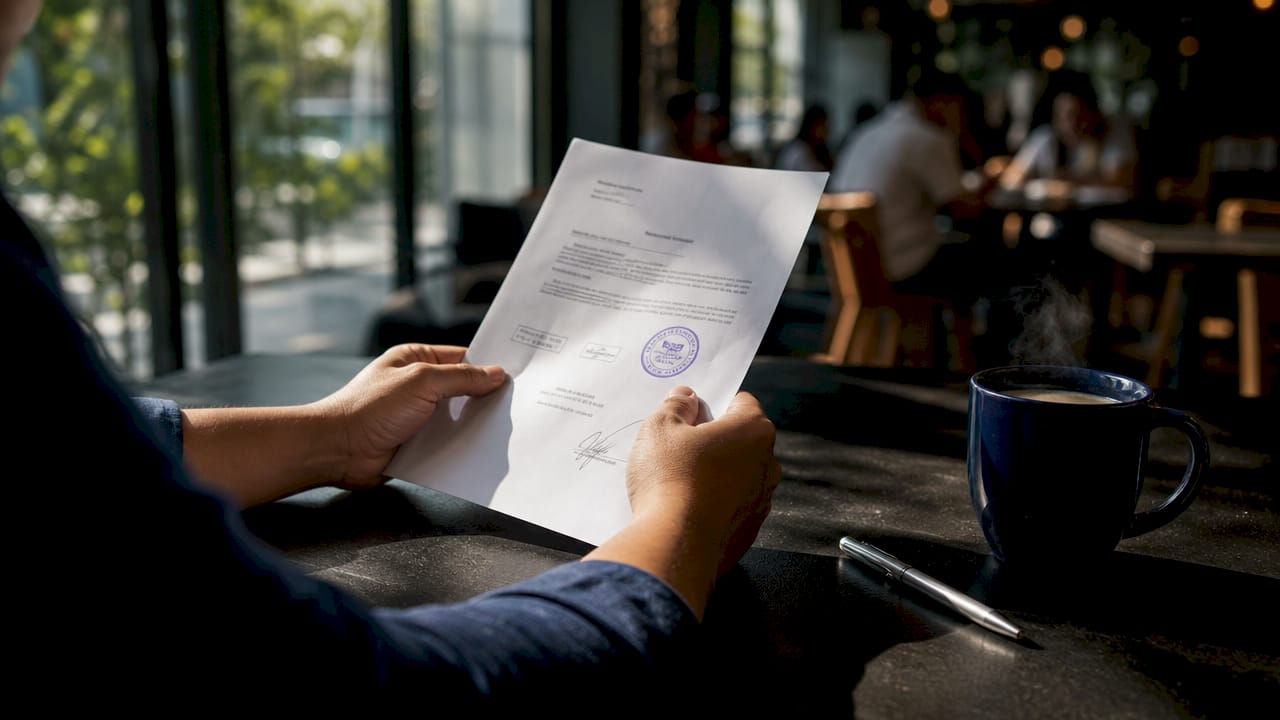
Some Free Zones also request a bank reference letter, an updated CV, and copies of professional certificates. These are more common for regulated activities like healthcare, finance, or education, where the authority wants proof of your qualifications. For legal documents for Filipino expats, having certified translations ready alongside originals speeds up the review.
Documents checklist for individual applicants:
Passport copy (minimum 6 months validity)
Passport-sized photographs (white background, recent)
Emirates ID copy (UAE residents only)
UAE residence visa copy (UAE residents only)
No Objection Certificate from employer (if employed)
Bank reference letter (activity-dependent)
CV and professional certificates (regulated sectors)
Pro Tip: Check the specific Free Zone’s photo specification before printing. Some zones require a 35mm x 45mm format; others accept 4cm x 6cm. Submitting the wrong size is a common, easily avoided delay.
What corporate documents are needed for company shareholders?
When a company, rather than an individual, holds shares in your Free Zone entity, the documentation list expands significantly. Free Zone authorities require proof that the corporate shareholder is legitimate, active, and properly authorized to invest.
The standard corporate documents required are:
Certificate of Incorporation — proves the company legally exists in its home country.
Board Resolution — a signed, dated resolution authorizing the company to form a UAE Free Zone entity and naming the authorized signatory.
Memorandum and Articles of Association (MOA/AOA) — the founding documents that define the company’s structure and powers.
Certificate of Good Standing — confirms the company is active and compliant in its home jurisdiction.
Register of Directors and Shareholders — a current list of who controls the company.
Proof of Registered Address — a utility bill or official letter confirming the company’s physical address.
Power of Attorney — if someone other than a director is signing documents on behalf of the corporate shareholder.
All of these documents require notarization, apostille, and UAE embassy attestation before submission. These are internationally recognized legalizations that confirm the documents are genuine. For Filipino entrepreneurs whose corporate shareholder is a Philippine-registered company, this means going through the Philippine Statistics Authority (PSA), the Department of Foreign Affairs (DFA) for apostille, and then the UAE Embassy in Manila.
Pro Tip: Start the apostille and attestation process at least 4–6 weeks before your planned Free Zone application date. Government processing times in the Philippines vary, and courier transit adds more days. For a detailed walkthrough, the UAE apostille and attestation guide covers every step for Filipino applicants.
What business-specific documents does the Free Zone require?
Beyond personal and corporate identity papers, every Free Zone application needs documents tied directly to your business activity. These are the records that define what your company will actually do and where it will operate.
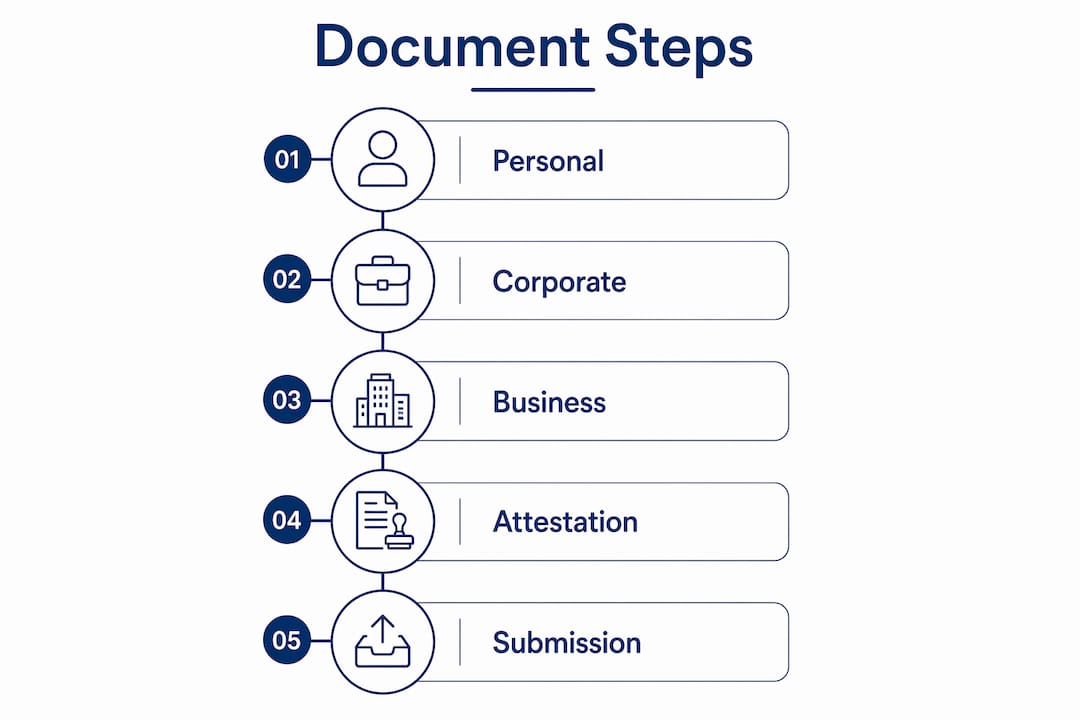
All Free Zones require a trade name reservation certificate and a signed application form as the starting point. The trade name must comply with UAE naming rules, meaning it cannot include religious references, offensive terms, or names already registered in the system.
A business plan is mandatory in many major Free Zones. A well-structured business plan demonstrates legitimacy to the Free Zone authority and supports KYC/AML compliance checks. Banks also scrutinize this document when you apply for a corporate account after your license is issued. A plan tailored to the Free Zone’s regulatory expectations accelerates both licensing and banking. Include your target market, revenue model, projected financials, and a clear description of your activities.
Business-specific documents required:
Trade name reservation certificate
Completed and signed application form
Business plan (mandatory in most major Free Zones)
Office lease agreement, flexi-desk contract, or virtual office agreement
Some Free Zones allow virtual office agreements to substitute a physical lease. This is a practical option for Filipino entrepreneurs who are not yet ready to commit to full office space. Confirm this option with your chosen Free Zone before applying.
Regulated activities require additional government approvals before your license is issued. Healthcare businesses need approval from the Dubai Health Authority (DHA) or the relevant emirate’s health regulator. Food businesses require clearance from the municipality. Finance-related activities need Central Bank or Securities and Commodities Authority (SCA) approval. Media and education activities have their own regulatory bodies.
Choosing the correct activity code during your application is critical. Mistakes in activity codes cause rejections for permits and block corporate bank account opening. Review the Free Zone’s published activity list carefully and match your business description to the right code before submitting.
How does remote application and visa processing work?
Filipino entrepreneurs living outside the UAE can still set up a Free Zone company. Non-residents can complete company incorporation digitally and remotely, with most Free Zones accepting scanned documents through online portals. However, some zones require original documents couriered to their offices at a specific stage. Missing that courier window delays license issuance.
After your license is issued, you can apply for an investor visa. The trade license supports subsequent investor visa applications, and the visa process requires its own set of documents: a medical fitness test, biometric registration, Emirates ID application, and health insurance proof. Your travel status matters here. If you are outside the UAE when the license is issued, you will need to enter the country to complete the visa stamping process.
Processing timelines vary across Free Zones. The table below gives a general overview:
Stage | Typical Timeline |
Document review and trade name approval | 1–3 working days |
License issuance | 3–15 working days |
Investor visa processing | 2–3 weeks |
Corporate bank account approval | 2–4 weeks |
Corporate bank account approvals take 2–4 weeks after license issuance and require additional documents beyond the Free Zone submission. Banks ask for detailed business plans, financial proofs, and sometimes personal bank statements. This stage is often more rigorous than the Free Zone licensing process itself.
Pro Tip: Always verify the specific Free Zone’s original document policy before couriering anything. Original document courier rules vary across Free Zones, and failure to dispatch mandated originals on time leads to missed license issuance windows. A quick email to the Free Zone’s business setup team confirms exactly what they need and when.
For a broader overview of the full registration process, the UAE business setup guide covers the legal framework from company type selection through license activation.
Key Takeaways
Successful UAE Free Zone registration depends on submitting complete, properly attested documents across three categories: personal identity, corporate structure, and business activity approvals.
Point | Details |
Personal documents are non-negotiable | Every applicant needs a valid passport, photos, Emirates ID (if resident), and an NOC if employed. |
Corporate shareholders need attested records | MOA/AOA, board resolutions, and incorporation certificates must be notarized, apostilled, and UAE embassy-attested. |
Activity codes determine extra approvals | Regulated sectors like healthcare and finance require government clearance before license issuance. |
Business plans serve two purposes | Free Zones use them for KYC compliance; banks use them for corporate account approval. |
Remote setup is possible but has limits | Digital submission works for most zones, but original documents may still need to be couriered at a specific stage. |
What I’ve learned from watching Filipino entrepreneurs get this wrong
The most common mistake I see is treating document attestation as an afterthought. Filipino entrepreneurs often focus on choosing the right Free Zone and activity code, then scramble at the last minute when they realize their Philippine-issued documents need apostille, DFA authentication, and UAE embassy attestation. That process alone can take three to five weeks. Starting it late pushes every other deadline back.
The second mistake is submitting a generic business plan. A one-page summary copied from a template does not satisfy the KYC requirements of a serious Free Zone authority. Banks are even less forgiving. A plan that clearly describes your clients, your revenue model, and your UAE market rationale moves through review faster. I have seen applications stall for weeks simply because the business plan did not match the declared activity code.
Remote applicants face a specific trap: assuming digital submission means no physical documents. Digitization in 2026 allows faster processing, but verifying whether original documents are still required remains critical. Some Free Zones will process your application digitally up to a point, then pause and wait for originals. If you are in Manila or Cebu when that happens, the courier delay is entirely on you.
My honest advice: treat the document preparation phase as the most important phase of your entire setup. Get your attestations done first. Write a real business plan. Confirm your activity code with the Free Zone before submitting. And if you are unsure about any step, get professional help early. The cost of a consultation is far less than the cost of a rejected application and a restarted timeline.
— Harris
How Harrisncharms helps Filipino entrepreneurs get their documents right
Setting up a Free Zone company in the UAE requires more than just gathering papers. It requires knowing which documents need attestation, which need apostille, and which need to arrive as originals.

Harrisncharms specializes in document attestation services for Filipino expats in the UAE. The team helps you prepare, legalize, and submit the right documents for your Free Zone application, from passport-related paperwork through corporate attestation and visa processing support. Whether you are applying from the UAE or remotely from the Philippines, Harrisncharms guides you through every document requirement so your application moves forward without unnecessary delays. Reach out to the team for a consultation before you start your Free Zone setup.
FAQ
What documents do I need to set up a UAE Free Zone company?
You need a valid passport copy, passport-sized photos, Emirates ID and visa copy (if a UAE resident), a No Objection Certificate if employed, a signed application form, a trade name reservation certificate, and a business plan. Corporate shareholders must also provide attested incorporation documents and board resolutions.
Do my Philippine documents need attestation for UAE Free Zone registration?
Yes. Philippine-issued documents must go through PSA certification, DFA apostille, and UAE Embassy attestation before a Free Zone authority will accept them. Skipping any step causes the application to be rejected.
Can I set up a UAE Free Zone company while living in the Philippines?
Most Free Zones allow remote digital incorporation, but some require original documents couriered to their offices at a specific stage. You will also need to enter the UAE to complete investor visa stamping after the license is issued.
How long does UAE Free Zone registration take?
Setup timelines range from 3 to 15 working days depending on the Free Zone and the completeness of your documents. Investor visa processing adds 2–3 weeks, and corporate bank account approval takes an additional 2–4 weeks.
Why is the activity code so important in the UAE Free Zone requirements list?
Incorrect activity codes cause rejections for permits and block corporate bank account opening. The activity code defines your company’s legal scope, so it must match your business plan and declared operations exactly.
Recommended
Comments