
Since June 1, 2026: Special Power of Attorney in the UAE for Expats
A special power of attorney (SPOA) in the UAE is a notarized, task-limited document that lets a named agent perform one specific act, such as selling a named property or completing a bank transaction. It only works if a licensed notary notarizes it and, for use abroad, the Ministry of Foreign Affairs (MOFA) legalizes it. Since June 1, 2026, most disposals such as sales, mortgages, or settlements can no longer rely on a general POA at all.
TL;DR:
Most disposals such as sales, mortgages, or settlements now require a specifically worded SPOA rather than a general POA, especially after the 2026 law changes.
Drafting an SPOA demands precise details, including full legal names, asset descriptions, transaction limits, and valid ID numbers, with Arabic translation from a licensed translator.
Notarization in the UAE must be completed through a licensed notary, and documents traveling abroad require MOFA legalization, with apostille accepted in Hague Convention countries.
Corporate SPOAs used for property or settlement acts must be backed by specific trade license, MOA, or board resolution to avoid rejection at the transaction stage.
Cross-border use of SPOAs involves careful sequencing of notarization, MOFA legalization, and matching the destination country’s requirements to prevent delays or rejection.
Table of Contents
What Is a Special Power of Attorney and How Does It Differ From a General POA?
When Do You Actually Need a Special Power of Attorney in the UAE?
How Do You Draft a Special Power of Attorney That Won’t Get Rejected?
How Do You Notarize and Attest a Special Power of Attorney in the UAE?
How Does Cross-Border Use of a UAE Special Power of Attorney Work?
What Are the Most Common Mistakes Before Notarizing an SPOA?
Harrisncharms’s Perspective: Practical Notes for Filipino Expats Handling SPOA Attestation
How Harrisncharms Handles Your Special Power of Attorney Attestation
What Is a Special Power of Attorney and How Does It Differ From a General POA?
A special power of attorney grants authority for one defined task, nothing more. You name the act (sell this apartment, close this bank account, collect this end-of-service payment), and the agent can do exactly that and nothing else. A general power of attorney, by contrast, covers broad management and preservation acts on your behalf, things like paying bills, renewing licenses, or handling routine correspondence.
The distinction sounds technical, but it decides whether your document gets accepted or bounced at a bank counter or land registry desk. Practitioners who work with UAE transactions daily report that receiving authorities apply a strict reading of scope. If your POA doesn’t name the specific asset and specific power the agent will exercise, the documented attestation process for expats can stall before it even starts.
This matters even more now. Under the 2026 corporate power of attorney rules, a general power of attorney no longer covers disposals, sales, mortgages, or settlements. Those acts now require a power expressly worded to grant that specific authority. The same principle already applied in litigation: Article 58(2) of the Civil Procedure Law reserves specific acts, admission, waiver, settlement, and submission to arbitration, to a special authority rather than a general litigation POA.
Common single-purpose SPOAs in the UAE include:
Authorizing a friend or relative to sell a specific property on your behalf
Granting a colleague power to represent you in one court case or settlement
Letting a family member collect a specific bank balance or end-of-service benefit
Authorizing an agent to register or transfer a specific vehicle
Permitting a representative to sign one defined business contract
Each of these needs its own document, scoped narrowly. A single SPOA that tries to cover “all my banking matters” starts drifting toward general POA territory, and a strict reviewer may reject it for vagueness.
When Do You Actually Need a Special Power of Attorney in the UAE?
Not every errand needs a notarized document. But certain transactions almost always demand one, and knowing which ones saves you a wasted trip to the notary.
Selling or mortgaging real estate. Land departments in every emirate require an SPOA naming the exact property, buyer or lender details where known, and the specific act (sale, mortgage, or transfer).
Banking transactions on someone else’s behalf. Banks routinely refuse general instructions and ask for a document naming the account, the transaction type, and often a value limit.
Litigation acts beyond basic representation. If your lawyer needs authority to settle, waive a claim, or agree to arbitration, that requires special authority under Article 58(2), not a standard litigation mandate.
Vehicle sale or transfer. The Roads and Transport Authority in Dubai and equivalent departments elsewhere expect the vehicle’s registration details spelled out.
Collecting funds or documents on your behalf. End-of-service payments, gratuity settlements, or document pickups from government offices often require a named, scoped authorization.
A rough rule of thumb: if the transaction changes ownership, moves money, or waives a right, assume you need special authority. If it’s ongoing management, paying rent, renewing a trade license, handling correspondence, a general POA may still work, though after the 2026 changes it’s worth double-checking with a notary before you assume anything.
How Do You Draft a Special Power of Attorney That Won’t Get Rejected?
Drafting an SPOA is less about legal flourish and more about precision. Notaries and receiving authorities look for exact matches between your document and your identification, and they look for scope language that leaves no ambiguity about what the agent can and can’t do.
Your draft should include:
Full legal names exactly as they appear on passport and Emirates ID, including middle names, since a single letter mismatch can trigger rejection
Passport and Emirates ID numbers for both principal and agent
A precise description of the act, naming the property, account, contract, or asset involved
Any value or transaction limits, especially for banking or sales authority, so the agent’s power has a ceiling
A validity period, since open-ended authority is one of the first things a strict counter reviewer flags
Conditional wording where relevant, such as requiring the agent to obtain your written confirmation before finalizing a sale price
Bilingual drafting matters more than most people expect. UAE authorities generally require the Arabic version, and MOFA and most notaries will not accept a translation done informally. It needs to come from a UAE-licensed legal translator. The Arabic translation requirement applies whether the original was drafted in English, Tagalog, or any other language.
Pro Tip: Draft the scope clause first and read it back as if you were the bank employee approving it. If you can imagine a reasonable objection to what’s written, tighten the wording before you book your notary appointment.
Security-wise, avoid open payment authority. If the agent needs to receive funds, name the account and amount range rather than granting blanket access. That single habit prevents most disputes that arise later between principal and agent.
How Do You Notarize and Attest a Special Power of Attorney in the UAE?
Notarization isn’t optional. A POA that skips this step has no legal standing in front of UAE authorities, regardless of how carefully it’s worded. Here’s how the process actually runs.
Choose your notary route. You can notarize in person at a public notary office, a Dubai Courts or Abu Dhabi Judicial Department (ADJD) private notary, or through the Ministry of Justice’s digital notary service. All three issue documents that carry legal standing before UAE authorities, per the notary public profession legislations.
Bring your identification and supporting documents. Passport, Emirates ID, and for corporate signatories, trade license and Memorandum of Association (MOA) extracts showing signing authority.
Attend the notary appointment or complete it digitally. In-person notarization is typically completed the same day. Digital notarization through the Ministry of Justice or Dubai Courts platform usually takes one to two working days.
Receive your notarized instrument. In-person notarization produces a counter-sealed paper original. Digital notarization issues a QR-verified digital original.
Verify authenticity if you’re the receiving party. Check the physical seal against the notary’s registration, or scan the QR code on a digital original to confirm it against the issuing platform.
If the document will be used outside the UAE, send it to MOFA for legalization. This is a separate step from notarization and cannot be skipped for cross-border use.
For destinations covered by the Hague Convention, an apostille may replace embassy legalization. Procedures still vary by destination country, so confirm with the receiving embassy or authority before you travel or submit documents abroad.
One practical wrinkle: digital notarization is faster and gives you a verifiable QR-coded original, but some banks and land departments still prefer the counter-sealed paper version for high-value transactions like property sales. Ask the receiving authority which format they’ll accept before you choose your notarization route, because redoing this step costs both time and money.
MOFA attests a POA the same way it attests most certificate-type documents, and it applies a standard fee of AED 150 regardless of the transaction’s value. That flat fee structure is worth knowing before you budget for a larger deal, since the attestation cost doesn’t scale with what the POA covers.
What Does It Cost, and How Long Does It Take?
Budget for three separate cost centers: the notary, the translation, and MOFA attestation if the document travels abroad. Fees do shift slightly by emirate and by whether you use a public or private notary.
Notary fees vary by emirate and by whether you use a public notary counter or a private notary office, with private notaries typically charging a premium for faster scheduling.
MOFA attestation runs a flat AED 150 for a power of attorney, treated as a certificate-type document.
Legal translation into Arabic by a UAE-licensed translator is a separate line item, priced per page or per document depending on the translation office.
Private notary premiums apply if you need faster scheduling than the public counter offers, particularly useful when a transaction has a tight deadline.
On timing, in-person notarization is usually completed the same day you show up with correct documents. Digital notarization through the Ministry of Justice generally takes one to two working days. MOFA attestation adds its own standard turnaround, and if you’re on a deadline, express services exist at a premium, worth using when a property closing or court date is fixed and non-negotiable.
What Changed Under the 2026 Law for Corporate SPOAs?
Companies operating in the UAE need to rethink their standing POAs. The Federal Decree-Law No. 25 of 2025 rule that took effect on June 1, 2026, means a general power of attorney no longer covers disposals such as sales, mortgages, or settlements. Any older general POA your company relied on for these acts needs replacing with an expressly worded special power before you attempt a registrable transaction.
The practical risk here isn’t abstract. A company that shows up to close a property sale or settle a dispute with a pre-2026 general POA may find the transaction refused at the counter, even though the document looked fine a year earlier.
Verifying who can sign matters just as much as the wording itself. A corporate signatory’s authority should trace back to one of three sources:
A trade license clause naming the individual as an authorized signatory
An MOA provision granting signing authority for specific transaction types
A board resolution explicitly authorizing the disposal or settlement in question
If none of these back up the signature, the counterparty may refuse the instrument outright, and a court could later void the underlying act.
Pro Tip: Before your company sends anyone to sign a disposal-related SPOA, pull the trade license and MOA and confirm the signatory’s authority in writing. It takes ten minutes and avoids a transaction collapsing weeks later over a technicality.
Practical steps for companies: audit existing general POAs used for property, banking, or settlement matters, replace any that touch disposals, and build a standing checklist that ties every corporate SPOA to a specific board resolution or MOA clause before it goes to the notary.
How Does Cross-Border Use of a UAE Special Power of Attorney Work?
Moving a POA across borders means running it through two separate legalization chains, and mixing up the order is the most common way people lose weeks of time.
For a UAE-issued SPOA to be used abroad, the document goes through notarization first, then MOFA legalization. From there, if the destination country is a Hague Convention member, an apostille often replaces embassy legalization. If it isn’t, you’ll need the destination country’s embassy in the UAE to legalize the document after MOFA.
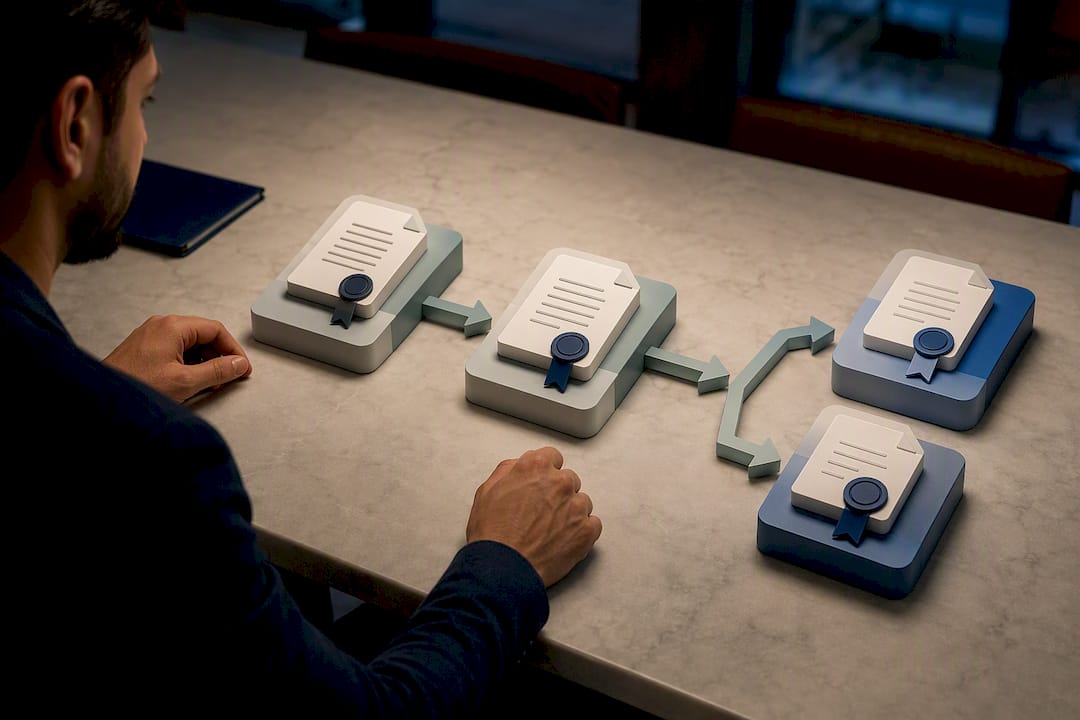
For a foreign-issued SPOA to be used in the UAE, the chain runs the other direction: foreign notary, then the foreign country’s own foreign ministry or apostille body, then the UAE embassy in that country, then MOFA in the UAE, and finally legal translation into Arabic by a licensed translator.
Common failure points include:
Doing the steps out of order, particularly sending a document to MOFA before it’s been through the originating country’s own legalization chain
Skipping the licensed Arabic translation, which UAE authorities require regardless of how well the original document is worded
Misclassifying the document as commercial versus non-commercial, which changes which office handles legalization in some jurisdictions
Assuming apostille always applies, when the destination or origin country isn’t a Hague Convention signatory
If you’re a Filipino national managing this from the UAE side, the document checklist for apostille and attestation walks through the DFA and embassy sequence that applies to Philippine-issued documents specifically.
How Do You Verify, Revoke, or Fix a Rejected SPOA?
A rejected document at a bank or land registry counter isn’t necessarily a legal failure. Often the chain is correct, but the receiving authority’s own internal policy still decides acceptance, so build in contingency time whenever a fresh SPOA might be needed.
Verify the notary seal or digital ratification first. Check a paper original’s seal against the issuing notary’s registration, or scan a digital original’s QR code against the Ministry of Justice or Dubai Courts platform.
If you need to revoke an SPOA, notify the notary or issuing platform formally. Revocation isn’t automatic just because you’ve changed your mind; it needs a documented step, and you should also directly notify any counterparty who was relying on the original document.
If a document is rejected at the counter, ask specifically why. Vague scope wording, an expired ID, or a missing translation are the most common reasons, and each has a fast fix.
For scope or wording issues, go back to the notary for a re-drafted instrument rather than trying to amend the original.
If the rejection touches corporate authority or a disputed transaction, bring in a lawyer before you resubmit, since a second rejection can complicate the underlying deal.
What Are the Most Common Mistakes Before Notarizing an SPOA?
Most rejections trace back to a handful of avoidable errors. Practitioner-documented failure points include vague scope wording, name mismatches between passport and Emirates ID, expired identification, missing Arabic translation, and corporate signatories lacking documented underlying authority.
Run this checklist before you book a notary appointment:
Names on the draft match passport and Emirates ID exactly, including middle names
IDs for both principal and agent are valid, not expired or close to expiry
The scope clause names the specific asset, account, or act, with no vague catch-all language
A licensed Arabic translation is ready or arranged
For corporate SPOAs, the trade license, MOA, or board resolution backing the signature is on hand
Pro Tip: If your situation involves overlapping issues, a disputed asset, multiple jurisdictions, or a corporate signatory whose authority isn’t clearly documented, skip the template and consult a lawyer. Templates work for straightforward, single-asset transactions; they fall apart fast when anything is contested.
Harrisncharms’s Perspective: Practical Notes for Filipino Expats Handling SPOA Attestation
Filipino expats in the UAE run into a specific version of this problem: coordinating a UAE-issued SPOA that also needs to work back home, often for a property sale, an estate matter, or authorizing a relative to handle a bank transaction in the Philippines. That means threading UAE notarization and MOFA legalization together with Philippine DFA red-ribbon or apostille requirements on the other end, and the two systems don’t always sync up neatly on timing.
The most common breakdown is sequencing. People send a document to MOFA before confirming what the Philippine receiving office actually needs, then discover the format or translation doesn’t match. Our experience processing Philippine documents for UAE use tells us the fix is almost always front-loading: confirm the receiving office’s exact requirements before the first notary appointment, not after.
For a single, low-value transaction, a careful DIY approach with a licensed translator can work. For property, corporate, or multi-jurisdiction matters, full-service attestation saves real time, and our Filipino-specific attestation guide covers the sequence in more detail.
— Harris
How Harrisncharms Handles Your Special Power of Attorney Attestation
Drafting, notarizing, and legalizing an SPOA across the UAE and Philippine systems means juggling two governments, two languages, and a translation requirement that trips up even careful applicants. The coordination of notary appointments, licensed translators, MOFA attestation slots, and embassy liaison can be managed as one process specifically for Filipino expats and workers in the UAE.

Before reaching out, have your passport, Emirates ID, and a clear description of the transaction the SPOA will cover ready, property details, bank account information, or the vehicle registration number, whatever applies. If your situation touches a Philippine receiving office, note that too, since it changes which chain of documents we prepare. For readers arranging attestation alongside other credential checks, our partner resource on degree attestation and background checks for GCC jobs covers a related process worth knowing about if you’re also handling employment documentation.
Start by visiting Harrisncharms to request a consultation and get a clear breakdown of what your specific SPOA will need before you commit to any appointment.
Sources
For readers who want to verify procedures directly, these are the primary sources behind this guide:
This article is general information, not a substitute for advice from a qualified lawyer. Consult a qualified legal professional about your own circumstances before acting on anything here.
FAQ
How much does a special power of attorney cost in the UAE?
Costs vary by emirate and notary type, but the fixed portion is the MOFA attestation fee of AED 150 if the document needs legalization for use abroad. Notary counter fees, private notary premiums, and licensed Arabic translation costs are separate and vary by provider.
How do I get a special power of attorney in Abu Dhabi?
You notarize the SPOA through the Abu Dhabi Judicial Department (ADJD) or the Ministry of Justice’s digital notary service, bringing your passport, Emirates ID, and a scope-specific draft naming the exact act. If the document will be used outside the UAE, it then goes to MOFA for legalization.
Can I get a power of attorney issued from outside the UAE?
Yes, but a foreign-issued SPOA needs to run through your local notary and foreign ministry, then the UAE embassy in that country, then MOFA in the UAE, and finally a licensed Arabic translation before UAE authorities will accept it.
How do I get a special power of attorney if I’m abroad and need it in the Philippines?
If you’re in the UAE and the document needs to work in the Philippines, notarize it in the UAE first, then get MOFA legalization, then follow the Philippine receiving office’s own requirements, typically DFA apostille or embassy confirmation. Confirming the Philippine side’s exact requirements before your first notary appointment avoids a mismatch later, and specialized attestation services can coordinate this sequence for Filipino clients.
Recommended
Comments