
Agency attestation guide for Filipino expats in the UAE
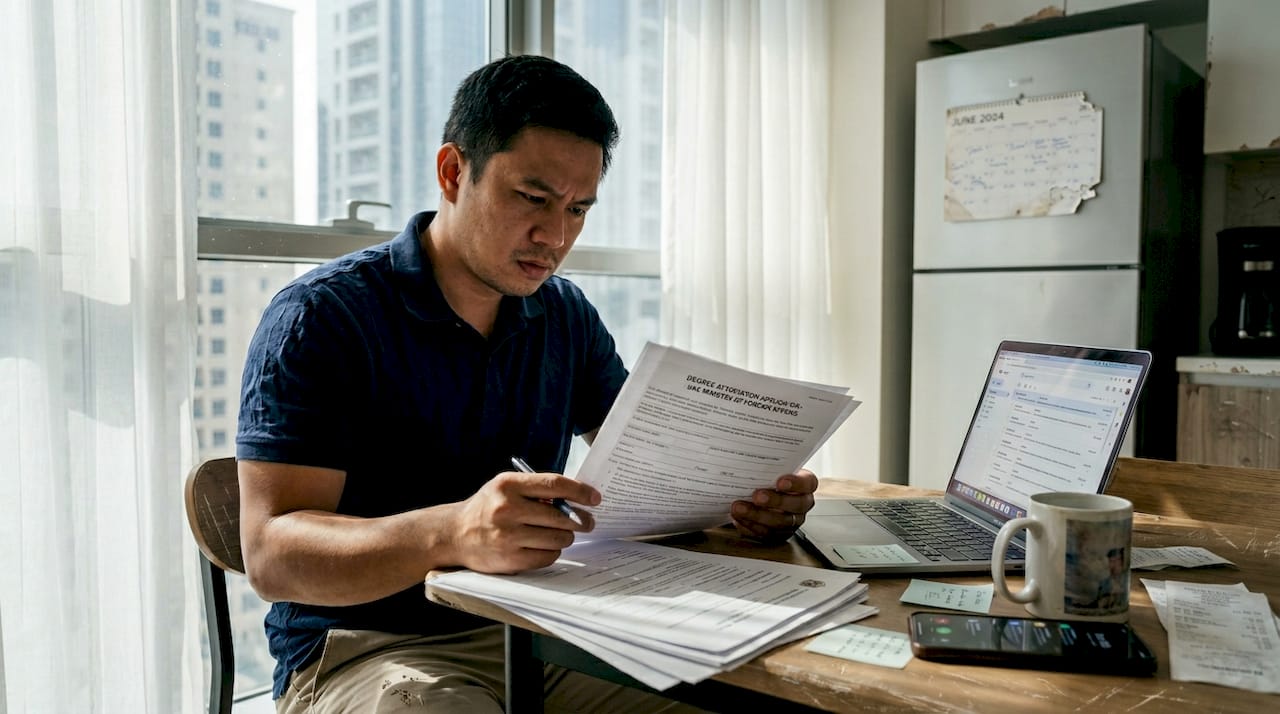
Many Filipino expats in the UAE have lost job offers, faced visa delays, or scrambled to fix costly document errors because they misunderstood one critical step: agency attestation. It happens more often than you think, and the frustrating part is that it is entirely avoidable. Whether you are starting a new job, renewing a visa, or signing a legal contract in the UAE, getting your Philippine documents properly attested is not optional. This guide walks you through exactly what agency attestation means, how the process works, and how to protect yourself from the mistakes that derail so many expats.
Table of Contents
Understanding agency attestation: Definition and why it matters
The agency attestation process: Step-by-step for Filipinos in the UAE
Comparing attestation agencies: What to look for and red flags to avoid
Common pitfalls and how to avoid document attestation delays
A Filipino expat’s perspective: What actually works with UAE agency attestation
Need reliable agency attestation? Get peace of mind for your UAE documents
Key Takeaways
Point | Details |
Agency attestation is essential | It validates the authenticity of Filipino documents for UAE authorities and employers. |
Choose reputable agencies | Selecting recognized agencies reduces risk of document rejection or seizure. |
Process takes 15–25 days | Most agencies take about 2–3 weeks but beware of unrealistic quick offers. |
Avoid common document errors | Incomplete papers or fake agencies can lead to costly delays and legal problems. |
Proactive preparation saves time | Double-check requirements and keep copies to minimize stress and errors. |
Understanding agency attestation: Definition and why it matters
Agency attestation is the process where a recognized third-party agency authenticates your Philippine documents so they are legally accepted by UAE employers, government offices, and courts. Think of it as a chain of trust: your document starts at its source in the Philippines, gets certified by government authorities, and then gets verified by a trusted intermediary before it lands in the hands of a UAE institution.
“Agency attestation is not just a formality. It is the legal bridge that connects a document issued in the Philippines to the requirements of the UAE legal and employment system.”
UAE employers and government bodies do not simply accept a photocopy of your birth certificate or diploma. They need proof that the document is genuine, unaltered, and issued by a recognized authority. Agency attestation provides that proof. Without it, your documents are essentially unverifiable in the UAE context.
Common documents that require agency attestation include:
Birth certificates and marriage certificates from the Philippine Statistics Authority (PSA)
Academic diplomas and transcripts from Philippine schools and universities
Employment contracts and clearances
Special Powers of Attorney and other notarized legal documents
Business registration certificates from the Securities and Exchange Commission (SEC)
The Philippine Consulate General in Dubai has issued clear warnings about the risks of using fake or unregistered attestation agencies. Document seizure, legal complications, and outright rejection by UAE authorities are real consequences when you use an illegitimate service. Understanding who can attest documents in the UAE is the first step to protecting yourself.
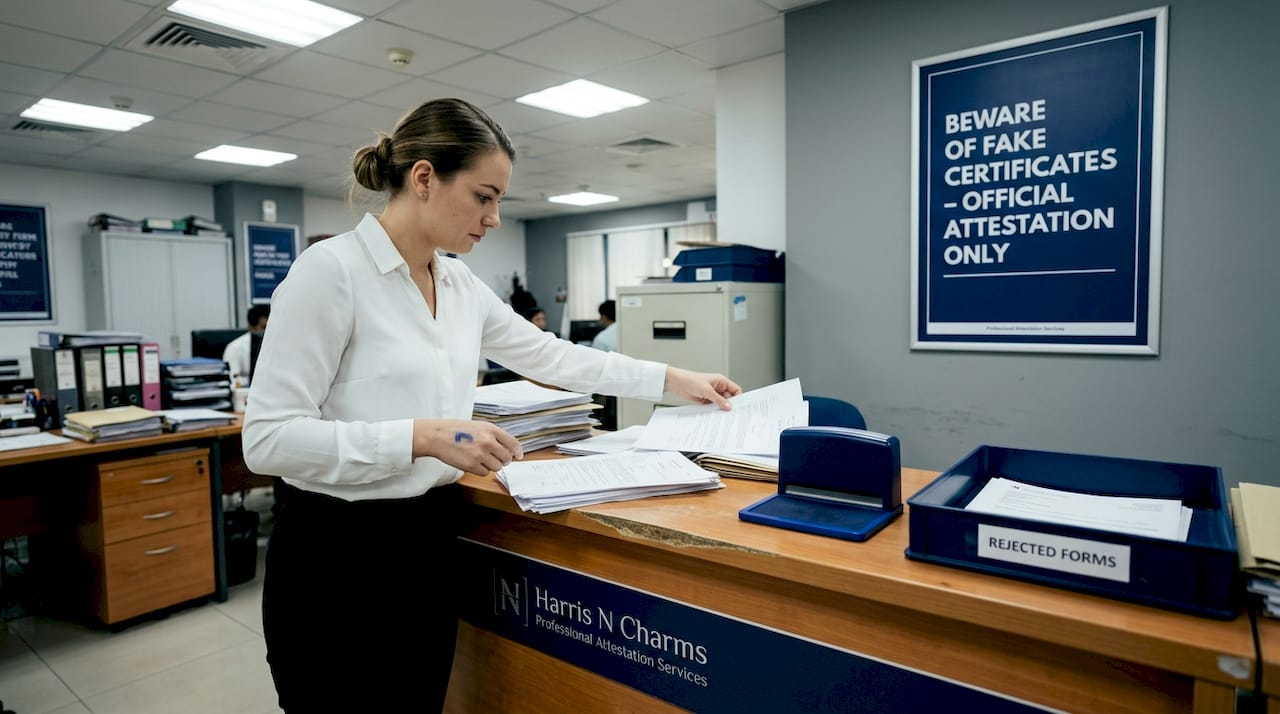
If you are new to this process, a solid Philippines attestation guide can give you a broader picture of how the entire system connects from Manila to Dubai.
The agency attestation process: Step-by-step for Filipinos in the UAE
With a clear understanding of what agency attestation is, let us explore exactly how the process works for Filipinos in the UAE.
The process involves multiple government bodies and several sequential steps. Skipping or rushing any one of them can invalidate the entire chain of authentication. Here is a practical breakdown:
Obtain the source document from the issuing authority. For civil documents like birth or marriage certificates, this means getting a certified true copy from the PSA. For educational documents, you need your school registrar to issue an official certified copy.
Get the document notarized if required. Some documents, particularly legal contracts and Special Powers of Attorney, need notarization by a Philippine notary public before they can proceed to the next step.
Secure DFA authentication or apostille. The Department of Foreign Affairs (DFA) in the Philippines authenticates or apostilles the document, confirming that the signature and seal of the issuing authority are genuine. The PSA and DFA apostille process is a critical part of the chain.
Submit to the UAE Embassy in Manila (if required). Depending on the document type and its intended use in the UAE, you may need the UAE Embassy in Manila to further authenticate it.
Finalize with UAE Ministry of Foreign Affairs (MOFA) attestation. Once the document arrives in the UAE, it typically needs MOFA attestation to be accepted by UAE government offices and employers.
Use a registered agency to manage the process. This is where agencies step in. A legitimate agency handles coordination, submission, follow-up, and delivery, saving you the logistical challenge of managing everything from abroad.
Stage | Responsible body | Location |
Source certification | PSA / School / SEC | Philippines |
Notarization | Notary Public | Philippines |
DFA apostille | Department of Foreign Affairs | Philippines |
UAE Embassy attestation | UAE Embassy Manila | Philippines |
MOFA attestation | Ministry of Foreign Affairs | UAE |
Agency coordination | Licensed attestation agency | Philippines or UAE |
Knowing how to properly prepare attestation papers before you hand anything over to an agency will save you significant time and money.
Pro Tip: Always request a written receipt for every document you submit to an agency, and ask for regular status updates. A legitimate agency will provide both without hesitation. If an agency refuses to give you a receipt or cannot tell you where your documents are in the process, treat that as a serious warning sign.
Most agencies claim processing takes 15 to 25 working days, though there are no official DFA or VFS benchmarks to confirm this. Any agency promising significantly faster results should be treated with caution.
Comparing attestation agencies: What to look for and red flags to avoid
Once you know the process, the next crucial step is picking the right agency or deciding if you should handle the process yourself.
Not all agencies are equal. The attestation market includes legitimate, experienced service providers alongside opportunistic operators who take your money and your documents without delivering results. Knowing how to tell them apart is essential.
Qualities of a reputable attestation agency:
Transparent, itemized fee structure with no hidden charges
Verifiable business registration and physical office address
Clear communication about timelines and process stages
Willingness to provide receipts and written acknowledgment of received documents
Positive reviews from other Filipino expats, particularly from community groups and trusted forums
Established track record of handling Philippine documents for UAE use
Red flags that should make you walk away:
Unusually low fees that seem too good to be true
No physical office or only communicates through messaging apps
Refuses to issue a receipt or any written documentation
Promises “express” processing far faster than the standard 15 to 25 working day range
Asks you to submit original documents without providing a formal acknowledgment
Cannot explain the step-by-step process when asked
Factor | Reputable agency | Risky agency |
Fees | Transparent and itemized | Vague or suspiciously low |
Office | Physical, verifiable address | No office or online only |
Receipts | Always provided | Refused or unavailable |
Timeline | Realistic, 15 to 25 working days | Promises unrealistically fast results |
Reviews | Verified positive feedback | No reviews or unverifiable claims |
Document handling | Formal acknowledgment issued | No paperwork for received documents |
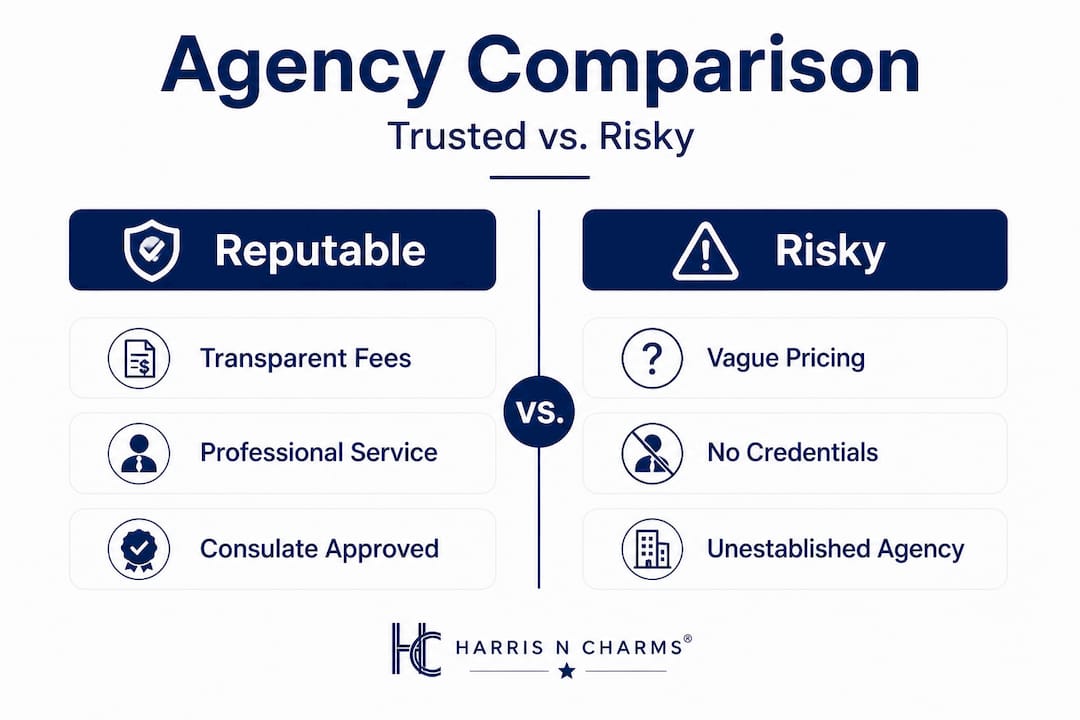
The Philippine Consulate General in Dubai specifically warns that using unestablished agencies puts your documents at risk of seizure if they are suspected of being fake. This is not a theoretical risk. It has happened to Filipino expats who trusted the wrong service provider.
Understanding the real benefits of apostille services can also help you decide when apostille alone is sufficient versus when full agency attestation is necessary for your specific situation.
Pro Tip: Before committing to any agency, ask other Filipinos in your workplace, community group, or expat forum for personal recommendations. Word-of-mouth from people who have successfully completed the process is far more reliable than any advertisement.
Common pitfalls and how to avoid document attestation delays
Knowing what can go wrong is just as important as understanding the process. Here is how you can avoid the most common pitfalls that slow down or derail attestation.
The most frequent mistakes Filipino expats make:
Submitting incomplete document sets, missing one required certificate or ID
Forgetting to include certified translations for documents not in English or Arabic
Using agencies that are not registered or recognized by relevant authorities
Failing to verify that PSA or school documents are current and not expired
Not keeping personal copies of every document submitted
Assuming that a DFA apostille alone is sufficient when UAE MOFA attestation is also required
Rushing the process and accepting unrealistic timelines from agencies
For school and academic documents specifically, the Philippine school document apostille guide outlines the exact steps and common errors to avoid when processing diplomas and transcripts.
If you are dealing with civil status documents, the CENOMAR and DFA apostille process has its own specific requirements that differ from other document types.
Key statistic: Most legitimate agencies consistently cite 15 to 25 working days as the realistic processing window. Any service claiming to complete the full process in just a few days is almost certainly cutting corners, using unofficial channels, or outright fabricating results.
One often-overlooked pitfall is not accounting for Philippine public holidays and DFA appointment availability, both of which can add days or weeks to your timeline. Plan ahead, especially if your employment start date or visa renewal deadline is fixed. Build in buffer time, and communicate clearly with your employer about realistic document processing windows.
Another mistake is assuming that documents attested for one purpose automatically qualify for another. A document attested for employment purposes may need to go through additional steps if you later need it for a legal proceeding or property transaction in the UAE. Always verify the specific requirements for your current use case.
A Filipino expat’s perspective: What actually works with UAE agency attestation
After seeing the process, comparisons, and common pitfalls, here is a perspective that rarely gets shared openly.
The single most underrated defense against attestation problems is paperwork discipline. Not speed. Not price. Not convenience. It is the habit of keeping organized, complete records of every document, every submission, every receipt, and every communication with an agency. Expats who treat their documents like assets rather than administrative burdens rarely find themselves in crisis mode when a UAE employer asks for attested papers on short notice.
The real cost of getting attestation wrong is not just the fee you paid a bad agency. It is the delayed employment contract that costs you weeks of salary. It is the visa renewal that gets pushed back because one document is rejected. It is the legal contract that cannot be executed because your Special Power of Attorney is not properly authenticated. These are not hypothetical scenarios. They are the actual experiences of Filipino expats who chose speed or price over reliability.
Here is the counterintuitive truth: the agencies that charge more, take longer, and require more documentation upfront are often the safest choice. They charge more because they are doing the process correctly. They take longer because they are not bypassing official channels. They require more documentation because they are protecting both you and themselves from legal risk.
The Philippine Consulate General in Dubai has been explicit about the consequences of using unregistered agencies, including document seizure when materials are suspected of being fraudulent. That is not a recoverable situation. Once your documents are flagged or seized, the process of proving their legitimacy becomes significantly harder and more expensive than if you had done it right the first time.
The Filipino expat community in the UAE is large and well-connected. Use that network. Ask around before you commit to any agency. The best referral you can get is from someone who has already successfully navigated the process with a specific provider.
Need reliable agency attestation? Get peace of mind for your UAE documents
Navigating agency attestation on your own is stressful, especially when your job or visa depends on getting it right. The good news is that you do not have to figure it out alone.

Harris N Charms specializes in document attestation and apostille services for Filipino expats in the UAE. With a deep understanding of both Philippine and UAE document requirements, the team helps you avoid the mistakes that cause delays, rejections, and unnecessary stress. Whether you need help with a birth certificate, diploma, legal contract, or any other document, Harris N Charms offers clear guidance, transparent fees, and a track record built on trust within the Filipino expat community. Visit harrisncharms.com to connect with the team, get a document check, or start your attestation process with confidence.
Frequently asked questions
Is agency attestation required for all documents in the UAE?
Agency attestation is typically required for employment, education, and certain legal document types, but not every document needs it. Always verify the specific requirements for your intended use case with your employer or the relevant UAE authority.
How long does the agency attestation process usually take?
Most agencies cite a range of 15 to 25 working days as a realistic estimate, though there are no official benchmarks. Be cautious of any agency that guarantees significantly faster results.
Can I do attestation myself without an agency?
Self-processing is possible but logistically challenging, especially from the UAE. Agencies reduce risk and handle coordination across multiple government bodies, and using a legitimate agency with a proven track record is strongly recommended for most expats.
What documents do I need for agency attestation?
You will typically need an original PSA or SEC certificate, a DFA authenticated or apostilled copy, valid government-issued IDs, and in some cases an authorization letter if someone else is submitting on your behalf.
Recommended
Comments