
Why Document Verification Is Crucial for Filipinos
- contact335627
- Jul 2
- 8 min read

Document verification is the process of confirming that submitted documents are genuine and belong to the person presenting them. For Filipinos navigating employment abroad, legal attestation, or immigration applications, why document verification is crucial becomes clear the moment a visa gets denied or a job offer falls through over a rejected file. The global identity verification market is projected at $15.8 billion in 2026, growing at a 21.9% compound annual rate through 2030. That growth reflects how seriously governments and employers now treat document authenticity. Anti-money laundering (AML) and counter-terrorism financing (CTF) regulations require verified documents at nearly every official checkpoint, from bank accounts to work permits.
Why document verification is crucial in modern processes
Modern verification no longer relies on a clerk holding a passport up to the light. AI-powered systems now use optical character recognition (OCR) and computer vision to read, extract, and cross-check document data in seconds. These systems verify documents in under 15 seconds, detecting over 99% of fraud attempts while achieving a first-attempt success rate of nearly 98% for legitimate applicants. That combination of speed and accuracy is why automated verification has replaced manual review in most regulated industries.
Cross-referencing is a core part of how these systems work. After reading a document, the system checks the extracted data against external consumer reporting agencies and government databases. If the name on a Philippine passport does not match the name on a Social Security System (SSS) record, the system flags the discrepancy immediately. Applicants who receive an adverse decision based on those external reports have a 60-day legal right to request and dispute the findings. That protection matters, because errors in external databases do happen.
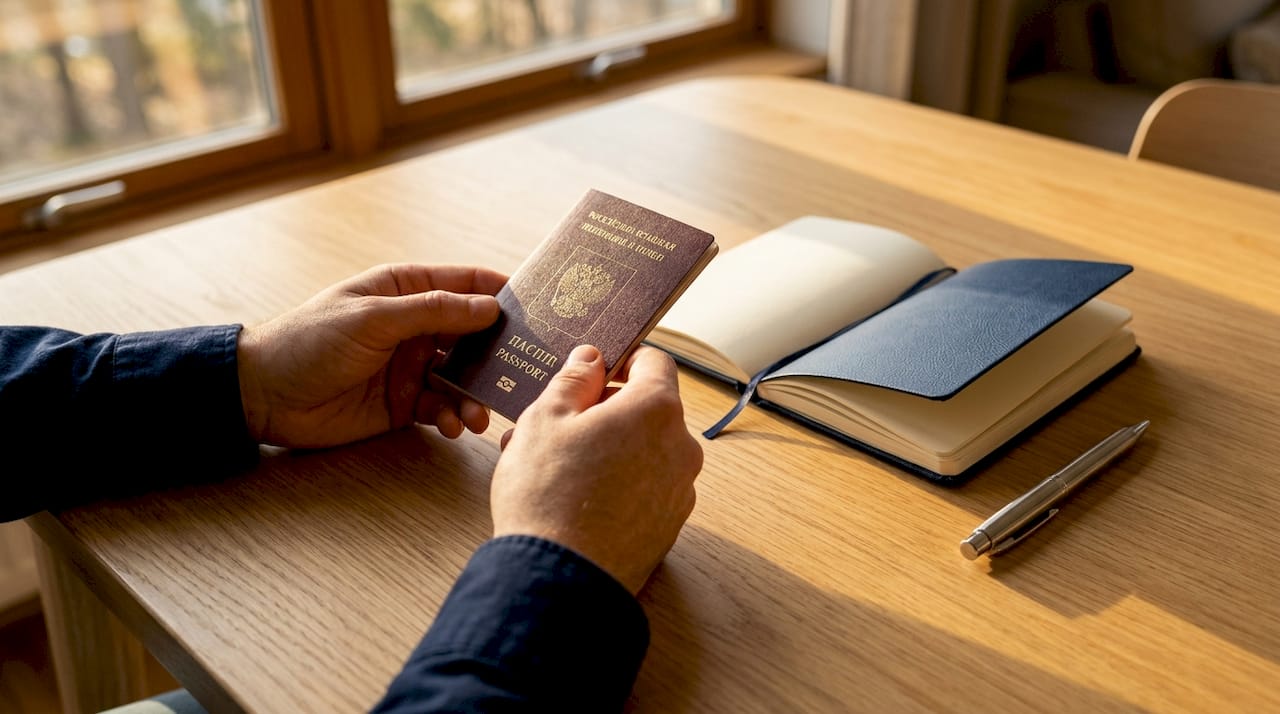
The best verification systems are also designed to avoid frustrating legitimate applicants. Passive and accurate checks reduce the number of unnecessary document requests, keeping the process moving without sacrificing security. For Filipinos submitting documents from overseas, that balance between thoroughness and speed is the difference between a smooth application and a months-long delay.
Pro Tip: Place your ID on a flat, dark surface with no shadows or glare before photographing it. Physical obstructions like a finger covering a corner or a reflection from overhead lighting are the leading cause of automated verification failures.
What happens when document verification fails
Failing document verification carries consequences that go well beyond a simple rejection letter. Regulatory non-compliance in identity verification can result in financial penalties reaching millions of dollars, suspension of professional registrations, and lasting reputational damage. For a Filipino worker whose employment agency loses its license over a compliance failure, that abstract penalty becomes a very concrete problem.
The consequences for individuals are just as serious:
Visa delays and denials. Immigration authorities in the UAE and other Gulf countries reject applications with unverified or inconsistent documents, often without a second chance to resubmit within the same application cycle.
Employment offer withdrawals. Employers in regulated industries, including healthcare, finance, and construction, are legally required to verify credentials. A document that fails verification can void a job offer even after signing a contract.
Legal exposure. Submitting a document you know to be inaccurate, even if the error is minor, can trigger fraud investigations under both Philippine and host-country law.
Onboarding delays. Incomplete or non-compliant files cause 42% of onboarding hold-ups, meaning a missing notarization or an expired clearance can push a start date back by weeks.
“Document verification serves as a defensible record of due diligence, protecting organizations by proving compliance in disputes and regulatory audits.” — LegalClarity
Understanding why attestation delays happen is the first step toward avoiding them. Most delays trace back to preventable errors made before submission, not to problems with the documents themselves.
Document verification best practices that actually work
The single most effective thing you can do is submit clean, complete files the first time. More than 85% of automated rejections come from poor scan quality or non-standard file formats. That statistic means the majority of failed verifications are entirely preventable with basic preparation.
A reliable verification checklist covers four areas:
Document type and format. Use the exact document type requested. A birth certificate issued by the Philippine Statistics Authority (PSA) is not interchangeable with a local civil registry copy in most international processes.
Data consistency. Names, dates, and ID numbers must match exactly across all submitted documents. A middle name written in full on one form but abbreviated on another will trigger a flag.
Image integrity. Scans must be clear, unobstructed, and in color where required. Black-and-white scans of documents that contain color security features often fail automated checks.
Completeness. Every required attachment must be present. Missing a single supporting document, such as a marriage certificate for a name change, stops the entire file.
Self-service submission portals address many of these issues before they become rejections. These portals save up to 60% of processing time by giving applicants real-time feedback on image quality and file completeness before the final submission. If a portal tells you the image is too dark, fix it immediately rather than waiting for a rejection notice three days later.
Pro Tip: Use a consistent checklist for every document type you submit. Repeatable rules catch errors that human review misses, and they protect you if a decision is ever disputed.
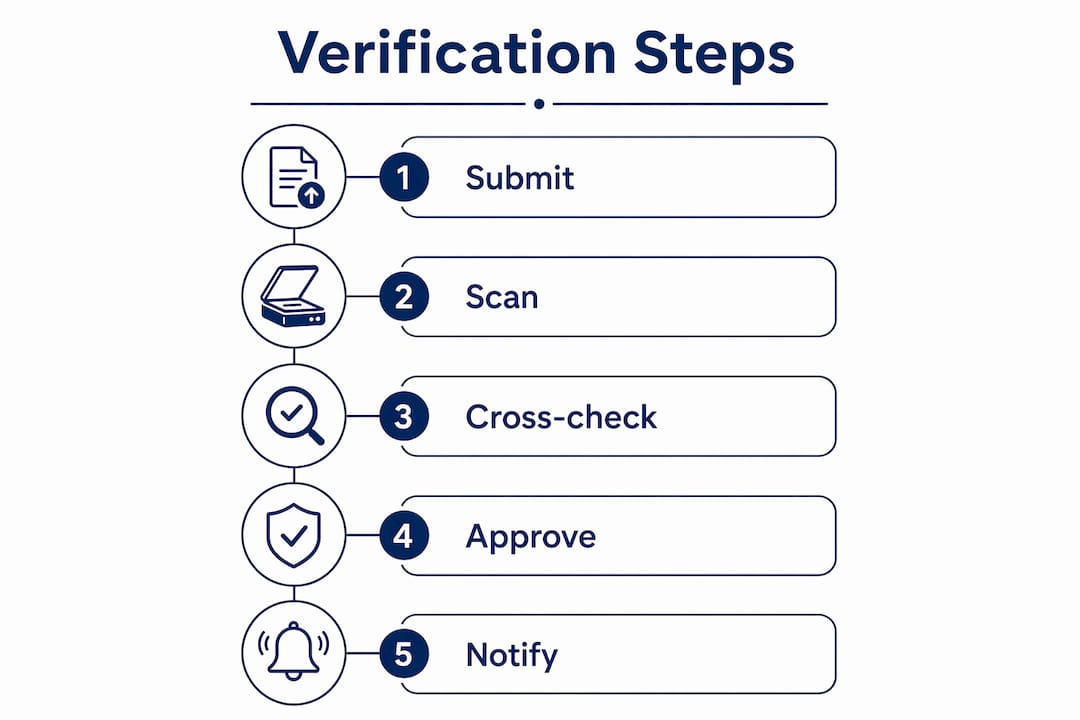
If a document is rejected, request the specific reason in writing. Most regulatory frameworks give applicants the right to dispute adverse findings. Acting on that right quickly, within the 60-day window where it applies, protects your application timeline.
Why verification matters for Filipinos in employment, legal, and immigration contexts
Filipinos working abroad face a layered verification process that most domestic applicants never encounter. Each layer, from the Philippine government to the host country’s immigration authority, applies its own standards.
Employment verification abroad
Employers in the UAE, Saudi Arabia, and other Gulf Cooperation Council (GCC) countries require verified educational credentials, employment history, and professional licenses before issuing a work visa. The Overseas Workers Welfare Administration (OWWA) and the Philippine Overseas Employment Administration (POEA) also require verified contracts and employer accreditation documents. A credential that has not been authenticated through the correct channel, whether that is apostille, attestation, or legalization, will not be accepted. Understanding the difference between document legalization and attestation is not optional for Filipinos applying to work in the UAE. It is a practical requirement.
Legal document attestation
Attestation is the formal process by which a government authority certifies that a document is genuine and that the signature on it belongs to a recognized official. For Filipinos, this typically means getting a document authenticated by the Department of Foreign Affairs (DFA) in Manila, then by the UAE Embassy, and finally by the UAE Ministry of Foreign Affairs. Each step in that chain is a form of document verification. Skipping or shortcutting any step results in a document that the receiving authority will not recognize. The real benefits of apostille services include cutting that multi-step chain down significantly for countries that accept the Apostille Convention.
Immigration compliance
Immigration applications require verified documents at every stage: identity, civil status, financial capacity, and health clearances. The UAE’s Federal Authority for Identity, Citizenship, Customs and Port Security (ICP) cross-checks submitted documents against its own databases and those of partner agencies. A document that passes Philippine verification but contains a formatting error unacceptable under UAE standards will be rejected at the UAE end. Filipinos who understand attestation trends in 2026 are better prepared to meet those evolving standards before they submit.
The table below shows how verification requirements differ across three common contexts for Filipino expats:
Context | Key documents required | Verification standard |
UAE employment visa | Degree, license, contract | DFA apostille or UAE Embassy attestation |
Legal transactions in UAE | Birth certificate, marriage certificate | DFA authentication plus UAE Ministry of Foreign Affairs |
Immigration and residency | Passport, NBI clearance, medical certificate | ICP cross-check against Philippine and UAE databases |
Key Takeaways
Document verification is the single most effective defense against fraud, visa denial, and onboarding delays for Filipinos in employment, legal, and immigration processes.
Point | Details |
AI verification is fast and accurate | Modern systems process documents in under 15 seconds with over 99% fraud detection. |
Poor scan quality causes most rejections | More than 85% of automated rejections come from image quality or format errors. |
Non-compliance carries serious penalties | Financial penalties can reach millions of dollars, and registration suspensions are possible. |
Attestation steps are non-negotiable | Each verification layer, DFA, embassy, and host authority, must be completed in the correct order. |
Dispute rights protect applicants | Applicants have a 60-day window to request and dispute adverse findings from consumer reports. |
What I’ve learned watching Filipinos navigate document verification
I’ve seen the same pattern repeat itself dozens of times. A Filipino applicant spends months preparing for a UAE job opportunity, gets the offer, and then loses it because one document in the file was not attested through the correct channel. The document itself was real. The credentials were legitimate. The problem was process, not authenticity.
The shift from manual to AI-based verification has made the process faster, but it has also made it less forgiving. A human reviewer might overlook a slightly faded stamp. An automated system will not. That is not a flaw in the technology. It is actually a feature, because it removes the inconsistency that allowed fraud to slip through for decades. But it does mean that Filipinos need to be more prepared than ever before, not less.
The most common mistake I see is treating document preparation as a last-minute task. Attestation timelines in the Philippines can run four to eight weeks depending on the document type and the DFA’s current workload. Starting that process the week before a visa appointment is a guaranteed delay. The applicants who succeed are the ones who treat verification as the first step in their application, not the final one.
Trustworthy partners matter here. Not every document service provider understands the specific requirements of UAE immigration authorities or the nuances of Philippine DFA authentication. Working with someone who specializes in this process is not a luxury. For a Filipino expat whose livelihood depends on getting it right, it is the most practical decision available.
— Harris
Harrisncharms: document attestation support for Filipino expats
Filipino expats preparing documents for UAE employment, legal transactions, or immigration applications face a process with very little margin for error.
Harrisncharms specializes in document attestation services for Filipinos in the UAE, helping applicants avoid the common pitfalls that cause rejections and delays. From DFA authentication to UAE Ministry of Foreign Affairs attestation, the team at Harrisncharms guides you through each verification step in the correct order. Errors at any stage cost time and money. Getting it right the first time is always the better option. Visit Harrisncharms to learn how professional attestation support can protect your application.
FAQ
What is document verification?
Document verification is the process of confirming that a submitted document is genuine and belongs to the person presenting it. It combines identity checks, data cross-referencing, and authenticity validation to prevent fraud and meet regulatory requirements.
Why is document verification needed for UAE employment?
UAE employers and immigration authorities require verified credentials before issuing work visas. Documents must be authenticated through the correct channels, typically DFA apostille or UAE Embassy attestation, or they will be rejected.
What causes most document verification rejections?
More than 85% of rejections come from poor scan quality or non-standard file formats. Submitting clear, complete, correctly formatted documents on the first attempt eliminates the majority of rejection risk.
How long does a Filipino have to dispute a verification decision?
Applicants have a 60-day window to request and dispute adverse findings based on consumer reports used in the verification process. Acting quickly within that window protects the application timeline.
What is the difference between attestation and legalization?
Attestation certifies that a document and its signatures are genuine, while legalization is a broader process that validates a document for use in a foreign country. For Filipinos in the UAE, both processes often apply depending on the document type and its intended use.
Recommended
Comments