
Popular UAE Attestation Myths Filipino Expats Must Know

Popular UAE attestation myths are widespread misconceptions that cause costly delays, rejected documents, and wasted money for Filipino expats navigating the UAE’s document legalization process. Attestation, formally known as document legalization, is the official chain of verification that makes foreign documents legally valid in the UAE. The UAE Ministry of Foreign Affairs and International Cooperation (MOFAIC), the UAE Embassy in the Philippines, and the Philippine Department of Foreign Affairs (DFA) are all key players in this chain. Getting any step wrong means starting over. This article breaks down the most damaging false beliefs about UAE attestation so you can move forward with confidence.
1. Popular UAE attestation myths start here: attestation is only for employment
Attestation is mandatory for far more than work visas. This is the most common false belief about UAE attestation, and it trips up Filipino expats across every life stage.
Documents that require attestation beyond employment include:
Marriage certificates for spousal residence visas and family reunification
Birth certificates for child visa applications and school enrollment
Educational diplomas and transcripts for professional licensing and university admissions
Property deeds and business contracts for commercial and legal transactions
Medical records for certain healthcare and insurance claims
Each of these documents follows its own attestation chain depending on the issuing authority and intended use. A marriage certificate needed for a UAE residence visa requires the same full chain as a degree certificate for a job offer. Skipping attestation because you assume it only applies to employment is one of the fastest ways to get your application rejected.
2. Any copy of a document can be attested
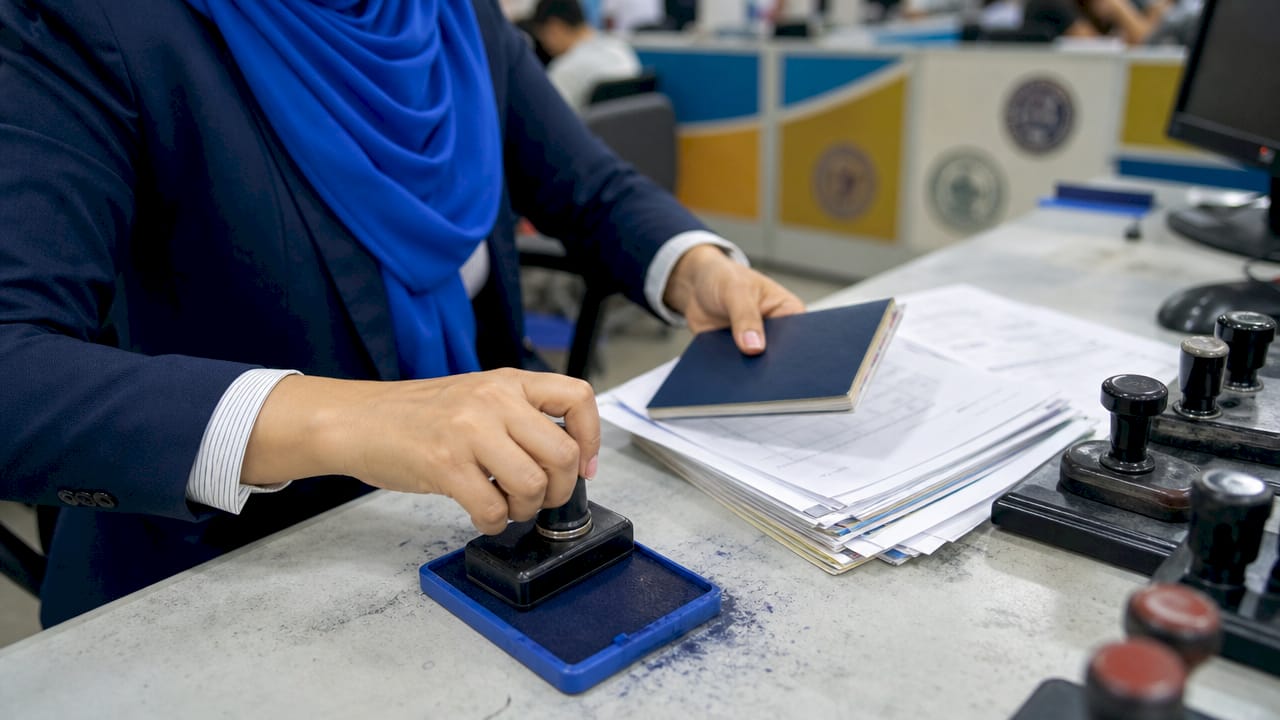
Only original documents or certified true copies are accepted for attestation. Photocopies, scanned printouts, and self-certified copies are rejected at every stage of the process.
Lamination is a particularly damaging problem. Lamination blocks stamping because embassy and MOFAIC officials cannot apply ink stamps to a plastic-coated surface. Attempting to remove lamination leaves adhesive residue on the document, which also causes rejection. This makes lamination the silent killer of attestation applications. Many Filipino expats laminate their PSA documents for protection, not realizing this makes them unusable for attestation.
Documents with handwritten corrections, white-out, or faded seals face the same fate. Physical document quality directly impacts final MOFAIC acceptance. The solution is to request a fresh certified copy from the issuing authority, such as the Philippine Statistics Authority (PSA) for civil registry documents.
Pro Tip: Never laminate any document you may need for attestation. Store originals in a clear plastic sleeve instead. If your document is already laminated, request a new certified copy from the PSA or the issuing institution before starting the attestation process.
3. Embassy verification can be skipped if you already have an apostille
This is one of the most expensive UAE attestation misconceptions to learn the hard way. The UAE is not a member of the Hague Apostille Convention. That means an apostille stamp, even a valid one from a recognized country, is never sufficient on its own for legal validity in the UAE.
The full attestation chain for Filipino expats looks like this:
Step 1: Authentication by the Philippine issuing authority (PSA, school registrar, etc.)
Step 2: Verification by the Philippine Department of Foreign Affairs (DFA)
Step 3: Attestation by the UAE Embassy in Manila
Step 4: Final MOFAIC stamp in the UAE
An apostille can substitute for the DFA step when a document originates from a Hague Convention member country. But the UAE Embassy attestation and the final MOFAIC stamp are always required, without exception. Documents submitted to UAE government entities with only an apostille are rejected and must restart the entire chain.
The distinction between apostille and attestation is explained in detail in this legalization vs. attestation guide for Filipino expats. Understanding the difference before you submit saves weeks of rework.
4. Attestation always takes only a few days
Processing time is not uniform. Document processing times vary widely by document type, origin country, and how well the applicant follows the attestation sequence and certification rules.
Common causes of delays include:
Missing steps in the chain: Skipping the DFA authentication before the UAE Embassy visit forces a full restart.
Incorrect stamp order: Obtaining UAE Embassy attestation before the home country foreign ministry stamp causes automatic rejection at the MOFAIC stage.
Translation issues: Submitting documents without a certified Arabic translation adds processing time and often triggers rejection.
Document condition problems: Faded seals, corrections, or lamination require reissuance before processing can begin.
Personal documents like birth and marriage certificates typically move faster than commercial documents. The MOFAIC charges around AED 150 for personal documents and AED 2,000 for commercial documents. Full door-to-door attestation for a degree certificate typically costs AED 700–1,200. Plan for at least two to four weeks for standard processing, and longer if any step requires correction.
Pro Tip: Start your attestation at least six weeks before your visa application deadline. Rush processing exists but costs significantly more and is not always available for every document type.
5. Translations done abroad or by non-certified agencies are accepted
UAE government entities require MOJ-certified translators for all foreign language documents, without exception. A translation done by a bilingual friend, an overseas agency, or even a certified translator from another country does not meet UAE standards for official submissions.
Private companies and banks may accept uncertified translations for internal purposes. But immigration authorities (GDRFA), labor courts (MOHRE), and civil courts require MOJ-certified Arabic translations every time. Submitting an uncertified translation to any of these bodies results in automatic rejection.
The order of operations also matters. Attestation must be completed before official translation. Translating a document first and then attesting it creates a mismatch between the attested original and the translated version, which triggers rejection. MOJ-certified translations are the universally accepted standard across all UAE government departments, making them the only safe choice for Filipino expats submitting official documents.
Different UAE government departments sometimes give conflicting advice on translation requirements. Erring on the side of full attestation and MOJ-certified translation prevents rejection regardless of which department you are dealing with.
Pro Tip: Always complete attestation before translation. Bring your fully attested original document to a UAE Ministry of Justice-certified translator. Ask for a written confirmation that the translator is MOJ-certified before paying.
Key takeaways
Dispelling common attestation myths UAE expats face requires knowing the full legal chain: MOFAIC, UAE Embassy, and home country verification are all mandatory steps that cannot be skipped or reordered.
Point | Details |
Attestation covers more than jobs | Marriage, education, business, and legal documents all require attestation depending on use. |
Originals only | Laminated, photocopied, or altered documents are rejected; always use certified originals. |
Apostille is not enough | The UAE is not a Hague Convention member; UAE Embassy and MOFAIC stamps are always required. |
Timing varies significantly | Plan for at least six weeks; delays from missing steps or poor document condition are common. |
MOJ-certified translation is mandatory | Government entities reject non-certified translations; always attest before translating. |
What I have learned from helping Filipino expats with attestation
Working with Filipino expats on UAE document attestation reveals one consistent pattern: the myths cost more than the process itself. I have seen applicants spend months in limbo because they assumed an apostille covered everything, or because they submitted a laminated PSA document without realizing it would be rejected on sight.
The most frustrating cases involve the stamp sequence. Getting the UAE Embassy stamp before the DFA authentication is a mistake that forces a complete restart. That is not a minor setback. It means reapplying, repaying fees, and waiting again from the beginning. The full attestation chain for OFWs is not complicated once you see it laid out clearly, but it is unforgiving when steps are skipped or reordered.
My honest observation is that most of these myths spread because the process looks simple from the outside. You get a stamp here, a stamp there, and you are done. But attestation is a legal chain of trust. Any broken link invalidates the whole chain. Filipino expats who understand this from the start avoid the expensive mistakes that others repeat.
The good news is that clarity is the cure. Once you know the correct sequence, the document requirements, and the translation rules, the process becomes manageable. Use official sources, verify requirements with the UAE Embassy in Manila and MOFAIC directly, and do not rely on secondhand advice from Facebook groups or coworkers who went through the process years ago. Requirements change, and outdated information is one of the biggest sources of these myths.
— Harris
Harrisncharms is here to help you get it right
Navigating UAE document attestation as a Filipino expat is straightforward when you have the right support. Harrisncharms specializes in attestation services built specifically for the needs of Filipino expats and overseas workers in the UAE.

From PSA documents to educational certificates and commercial papers, Harrisncharms handles the full attestation chain so you avoid the common pitfalls covered in this article. No guessing about stamp sequences, no rejected documents from lamination or missing steps. Visit Harrisncharms to learn about available services and get your documents processed correctly the first time. You can also review the latest 2026 attestation requirements to make sure your documents meet current standards before you start.
FAQ
Does the UAE accept apostille stamps from the Philippines?
The UAE is not a member of the Hague Apostille Convention, so an apostille alone is never sufficient. UAE Embassy attestation and a final MOFAIC stamp are always required.
What documents need attestation in the UAE beyond work visas?
Marriage certificates, birth certificates, educational diplomas, property deeds, and business contracts all require attestation depending on their intended use in the UAE.
Can I submit a laminated PSA document for attestation?
No. Lamination prevents embassy and MOFAIC officials from applying stamps. You must request a fresh certified copy from the PSA before starting the attestation process.
How long does UAE document attestation take for Filipino expats?
Standard processing takes at least two to four weeks for personal documents. Delays from missing steps, incorrect stamp order, or document condition issues can extend this significantly.
Do I need a certified Arabic translation before or after attestation?
Attestation must be completed before translation. UAE government entities require MOJ-certified Arabic translations, and the translation must be based on the fully attested original document.
Recommended
Comments