
Dubai Police Clearance: A Step-by-Step Guide for OFWs
Updated: Sep 5

If you currently live in the UAE, apply online through UAE PASS. If you are outside the UAE, you need a ten-print fingerprint card authenticated by the UAE Embassy before you submit anything digitally. Both routes lead to the same result: a Dubai Police clearance or Ministry of Interior (MOI) certificate confirming you have no criminal record in the country.
The two agencies issuing this document are Dubai Police (for Dubai residents and applicants using the emirate channel) and the federal MOI (for the national portal). If your certificate needs to be used outside the UAE, the Ministry of Foreign Affairs (MOFA) has to attest it, and that step adds both time and cost.
Before you start, do three things:
Confirm your Emirates ID is active and linked to your UAE PASS account.
If you’re applying from the Philippines or another country, request an authenticated fingerprint card from the UAE Embassy nearest you now, since this takes the longest.
Check the exact deadline your recipient (employer, embassy, immigration office) has set, so you don’t apply too early and let the certificate expire before you use it.
Key Takeaways
Applying for a Dubai police clearance depends entirely on your residency status, and the 30-day validity window means timing your application against your recipient’s deadline matters more than speed.
Point | Details |
Two issuing routes | Dubai Police and MOI both issue certificates; residents apply online, applicants abroad need an embassy-attested fingerprint card first. |
Fees vary by use case | Federal fees run around AED 50 for internal use and AED 100 for overseas use, with MOFA attestation added on top. |
Validity is short | Certificates commonly expire after 30 days, so apply only once your submission deadline is confirmed. |
Embassies attest, not issue | The UAE Embassy authenticates fingerprint cards but cannot issue the certificate itself; that only happens through Dubai Police or MOI. |
Handled service for tight deadlines | Harrisncharms coordinates embassy authentication, fingerprint cards, and MOFA attestation in one engagement for applicants juggling deadlines from abroad. |
Table of Contents for Dubai Police Clearance
Documents, Fees, and Validity You Need to Confirm First
Gathering the wrong paperwork is the single biggest reason applications stall. What you need depends entirely on whether you’re inside or outside the UAE right now.
For UAE residents, the list is short:
Emirates ID (active, not expired)
A clear passport copy
A working UAE PASS login linked to your mobile number
For applicants outside the UAE or former residents without a UAE biometric record on file, add a fourth item: a ten-print fingerprint card certified by the UAE Embassy in your country of residence, plus a copy of your last UAE visa if you have one.
Fee snapshot: aggregated reporting on federal MOI fees puts the standard rate at AED 50 for certificates used inside the UAE and AED 100 for certificates headed overseas, with MOFA attestation charges stacked on top for overseas use. Treat these as a starting estimate. Fees can vary by channel and nationality, so check the service card on your chosen portal or app before paying.
The validity window is the trap most people fall into. Certificates are commonly valid for a short period from issue, often about a month. Order yours too early, relative to when your recipient actually needs it, and you’ll be paying for a second one.
How to Apply If You Live in the UAE
If your Emirates ID is active, this is the fastest route to a clean police clearance certificate UAE employers or immigration offices will accept.
Step 1: Log in and select the service. Open UAE PASS, then access the Police Clearance or Good Conduct Certificate service through either the Dubai Police app or the MOI website. Both accept UAE PASS as the single sign-on, so you skip creating a separate account.
Step 2: Enter your data carefully. Fill in personal details, passport information, and the purpose of the certificate (internal use versus overseas use, since this changes the fee). Dubai Police explicitly holds applicants responsible for the accuracy of what they submit, and misuse of the certificate or false information can lead to legal consequences. This isn’t a box to fill in quickly and move past.
Step 3: Pay and confirm biometrics. Pay the service fee online. If your fingerprints are already on file (most residents who’ve completed prior Emirates ID or visa processing), you skip in-person fingerprinting entirely. Visitors, some GCC nationals, and residents without a prior biometric record still need to show up in person.
Step 4: Download your certificate. Once approved, the certificate arrives through the app or by email, ready to print. If it’s headed to a foreign authority, that’s your cue to start the MOFA attestation process next, not after you’ve already handed it over.
Available channels: Dubai Police app, MOI portal, Dubai Police website
UAE PASS required for all digital submissions
In-person fingerprinting only for those without biometrics on file
Pro Tip: Screenshot your application reference number the moment you submit. If the portal glitches during payment, that number is the fastest way to confirm your submission actually went through instead of resubmitting and paying twice.
How to Apply From Outside the UAE or as a Former Resident
If you’ve already left the UAE, or you’re applying from the Philippines and never held an Emirates ID, your path runs through a fingerprint card rather than a login screen.
Get fingerprinted locally. Visit your local police station or an accredited fingerprinting service in your country of residence and request a ten-print fingerprint card. This is the standard format UAE authorities require.
Get the card authenticated. Bring the fingerprint card to the UAE Embassy in your country and have it authenticated. Dubai Police confirms this authentication step is mandatory for anyone abroad without an existing UAE fingerprint record.
Gather supporting documents. Alongside the attested fingerprint card, most channels want a passport copy, your last UAE visa page if you were previously a resident, and sometimes two passport photos.
Submit online. Once your fingerprint card is authenticated, submit your application and upload the card through the Dubai Police or MOI portal, just as a resident would.
Embassy authentication is almost always the slowest link in this chain. The UAE Embassy itself does not issue the police clearance certificate. It only authenticates the fingerprint card. This confusion trips up a lot of applicants who assume the embassy visit is the final step, when it’s actually the middle of the process.
Pro Tip: Call the UAE Embassy before you show up to ask about their current fingerprint-card processing time. Some embassies handle it same-day; others need an appointment booked weeks out, and that gap will decide your entire timeline.
Fingerprinting in Dubai: Who Needs to Show Up and Where
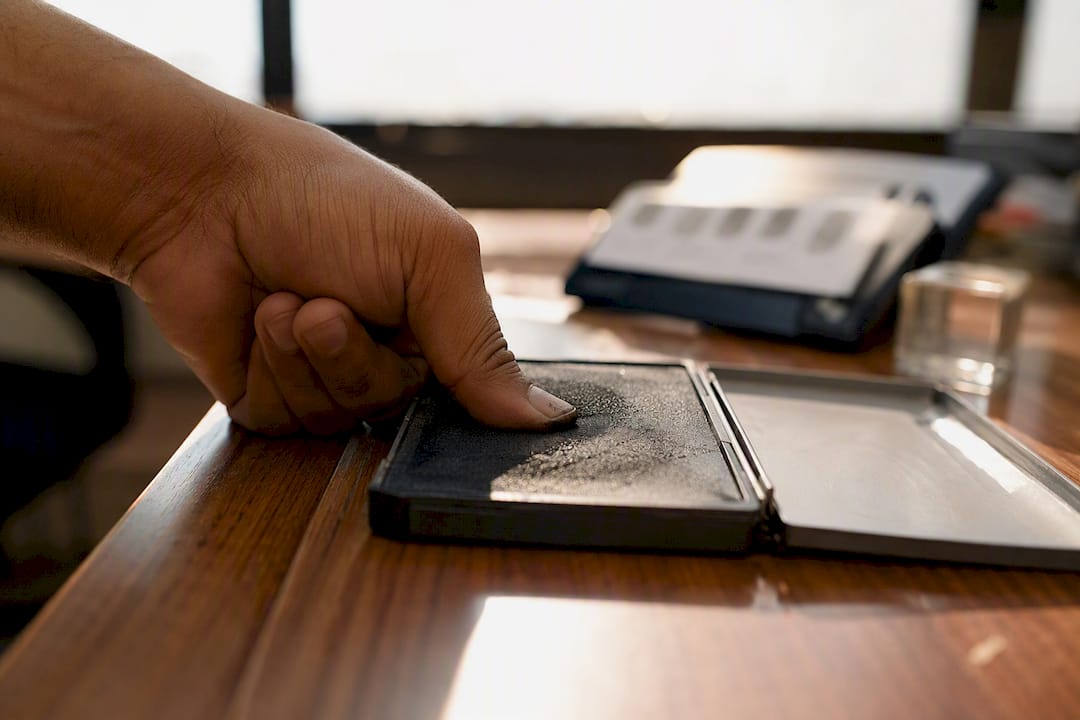
Not everyone needs an in-person fingerprint appointment. If your biometrics are already on file from a previous Emirates ID or visa application, the system pulls that record automatically. If you’re a visitor, a GCC national without a UAE ID, or someone whose old biometric record has aged out, you’ll need to go in person.
Dubai offers several official options for this:
Smart Police Stations, available in multiple locations across the city for automated ten-print capture
Named Dubai Police stations that still handle walk-in fingerprinting during standard hours
The Dubai Police app, which in some cases lets you book a fingerprinting slot in advance rather than waiting in line
At the appointment itself, expect a straightforward process: an ID check, a ten-print scan on a digital capture device, and occasionally a small on-site fee if it wasn’t already covered in your online payment. Bring your Emirates ID or passport regardless of which category you fall into.
MOFA Attestation and Sending Your Certificate Abroad
If your certificate is headed to a foreign government, employer, or immigration office, expect one more step after Dubai Police or MOI issues it: MOFA attestation.
Certificates meant for use inside the UAE generally don’t need this step at all.
Certificates meant for a foreign authority almost always do, and attestation generally adds a separate charge on top of the original certificate fee..
Some receiving countries also require the certificate translated and further legalized once it reaches them, so confirm this with the recipient directly rather than guessing.
The full chain looks like this: Dubai Police or MOI issues the certificate, MOFA attests it, and then the receiving authority applies whatever additional requirements it has, translation included. Order your certificate only once you know the exact date it needs to land on someone’s desk. Given the relatively short validity window most channels apply, starting the process too soon just means you’ll be paying for a second certificate later.
Timing, Validity, and the Mistakes That Cost You a Second Application
The certificate’s short shelf life is the constraint that shapes everything else in this process. A 30-day validity window sounds generous until you factor in MOFA attestation time, courier delays, and a recipient’s own processing backlog.
The most common mistakes Filipino applicants make:
Applying for the certificate before the recipient’s deadline is confirmed, and watching it expire in a drawer.
Submitting a fingerprint card that wasn’t properly authenticated by the embassy, which gets the application rejected outright.
Making small errors in personal data entry, like a mismatched passport number, that trigger a manual review and add weeks.
Assuming fees are identical across channels and getting caught short at the payment screen.
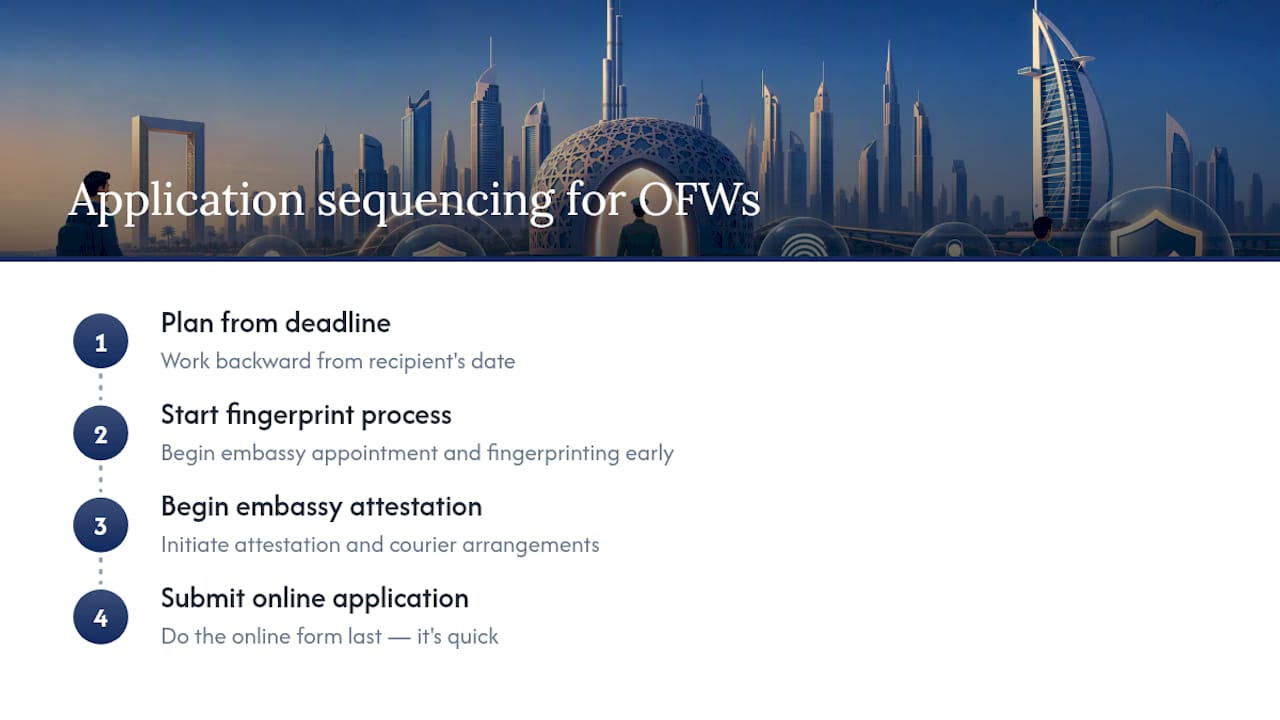
The fix for most of this is sequencing, not luck. Confirm the recipient’s deadline first, count backward through attestation and courier time, and only then submit your application.
Pro Tip: If you’re juggling a tight deadline and an embassy attestation on top of it, a handled attestation service can absorb the coordination work so you’re not making three separate trips across two countries.
What the Official Process Gets Wrong for OFWs
Most guidance on this topic reads like it was written for someone with unlimited time and a government office next door. That’s not the reality for many overseas workers who need a certificate on a tight deadline. while their fingerprint card is stuck at an embassy appointment desk 8,000 kilometers away.
The conventional advice, “just apply online,” works fine if you already hold an Emirates ID. It falls apart completely for anyone applying from the Philippines because the fingerprint card and embassy authentication step routinely take longer than the certificate’s entire validity period once you factor in courier time. That’s the real risk nobody flags loudly enough: not rejection, but expiration before the document even reaches its destination.
If there’s one thing worth prioritizing above everything else here, it’s sequencing your deadline backward from the recipient’s date, not forward from the day you feel ready to start. Get the fingerprint card and embassy attestation moving first. The online application itself is the easy part.
— Harris
Get Your Police Clearance Certificate Handled Start to Finish
Chasing an embassy appointment, a fingerprint card, and a MOFA attestation deadline across two countries is a lot to manage alongside a full time job in the UAE. Harrisncharms is the alternative to doing this solo: we coordinate the embassy authentication, prepare your fingerprint card paperwork, handle MOFA attestation, and translate documents when a receiving authority requires it, so nothing sits waiting on your desk while your certificate’s 30-day clock runs out.

This service earns its keep most when you’re applying from outside the UAE, juggling a tight employer or immigration deadline, or facing an attestation chain with more than one stop. Fees and turnaround depend on your specific document path, and we’ll walk you through both before you commit to anything. If your Philippine documents also need attestation for use in the UAE, we handle that in the same engagement instead of sending you to a second provider.
Visit the Harrisncharms landing page to get a quote and start your application today.
Sources
Recommended
Comments