
Documents for UAE apostille and attestation: Filipino guide
- contact335627
- May 10
- 9 min read
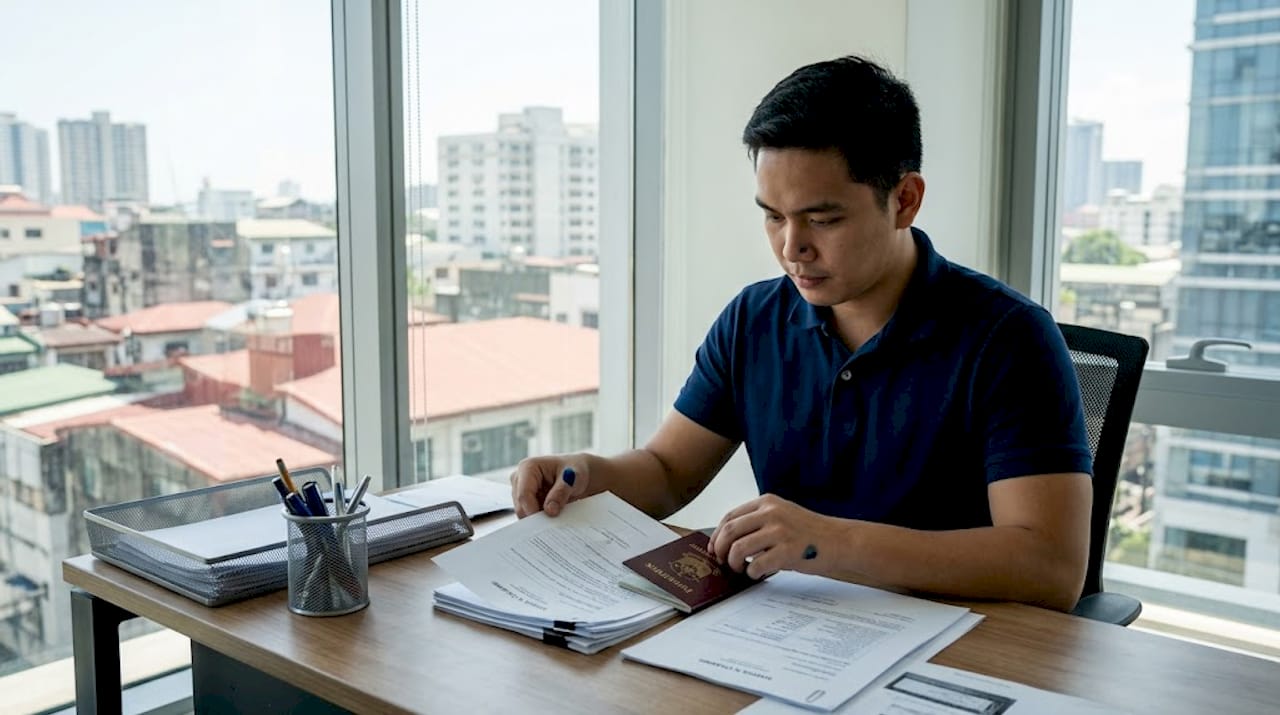
Landing your dream job in Dubai or bringing your family to Abu Dhabi is an exciting milestone. But one missing document can freeze your visa application, delay your contract start date, or force you to fly back to Manila just to fix a paperwork gap. Filipino expatriates face this frustration more often than you’d think, not because they’re unprepared, but because the requirements for UAE apostille and attestation are layered, purpose-specific, and change more often than official websites reflect. This guide breaks down every document you need, when you need it, and exactly how to get it properly processed.
Table of Contents
Key Takeaways
Point | Details |
Check document type | Each UAE purpose (job, family, residence) requires a different set of attested documents. |
Follow step sequence | Always prepare notarization, DFA apostille, then UAE Embassy attestation in order. |
Have originals and photocopies | Full approval needs both your original documents and clear copies for submission. |
Know special case extras | Employment, family, and some visas need additional certificates or clearances—verify in advance. |
Professional help pays off | Expert assistance can save time and avoid procedural pitfalls common among Filipinos in the UAE. |
Core documents needed for UAE apostille and attestation
Apostille and attestation sound interchangeable, but they serve different functions. An apostille is a simplified authentication issued under the Hague Convention, confirming that a document’s signatures and seals are genuine. The Philippines joined the Hague Apostille Convention in 2019, so the Department of Foreign Affairs (DFA) now issues apostilles directly on Philippine documents. Attestation, on the other hand, is an additional layer of verification that the UAE Embassy or Consulate in Manila performs after the DFA step. For Filipino expats, this two-step process is the standard route for legalizing Philippine documents for UAE use.
Here are the core documents almost every applicant will need, regardless of their specific UAE purpose:
Original passport (valid, with at least six months of remaining validity) plus a clear photocopy of the data page
College degree or diploma (for professional or skilled employment visas)
Transcript of Records (TOR) from your issuing school or university
PSA-issued birth certificate (required for nearly all visa categories)
PSA-issued marriage certificate (if applicable, especially for family or spouse visas)
National Bureau of Investigation (NBI) clearance or Philippine National Police (PNP) clearance
Valid government-issued ID in addition to your passport
Completed application forms required by the UAE Embassy
The UAE Embassy Manila requirements specify that you must bring the original document plus a photocopy, a valid ID such as your passport, and the applicable fees after DFA processing. Do not show up with photocopies alone. Originals are non-negotiable at the Embassy counter.
Older documents that carry a “Red Ribbon” from DFA prior to 2019 may still need verification. The DFA replaced the Red Ribbon system with the apostille seal, so if your documents were authenticated under the old system, check whether they need to be re-issued or reprocessed before embassy submission.
Specialized documents for employment, family, and other UAE visa types
While the basic documents get you started, your purpose in the UAE will dictate which extra papers are a must. The UAE immigration and labor system is segmented, meaning a construction worker, a nurse, a spouse joining their partner, and a domestic worker each operate under different visa frameworks with different documentary demands.
Here is a breakdown of what each scenario typically requires:
Employment visa applicants. You will need your attested degree certificate and TOR. The Ministry of Human Resources and Emiratization (MOHRE) requires proof of your educational credentials before approving most professional work visas. Without a fully attested degree, your employer cannot complete the visa process on their end. Refer to an attestation guide for UAE expats to understand which credentials qualify.
Skilled or licensed professionals. Nurses, engineers, teachers, and other regulated professions may also need their Professional Regulation Commission (PRC) license attested, along with a Certificate of Employment from previous employers.
Family or dependent visa applicants. If you are sponsoring a spouse or children, you will need attested marriage and birth certificates. The UAE family visa requirements for 2026 confirm that attested degree certificates are needed for employment, while attested marriage and birth certificates are required for family residency, and police clearance applies to certain visa types.
Long-term or retirement visa applicants. Some UAE long-term residency categories require an NBI clearance and may ask for additional financial documents or property ownership proof, depending on the specific visa type.
Domestic workers. A separate set of requirements applies here, including medical fitness certificates and agency-issued endorsement letters.
Pro Tip: Requirements update frequently. Always verify the current list directly from the UAE Embassy in Manila or the Philippine Overseas Labor Office (POLO) before your submission date. An updated school document attestation resource can also help you confirm current processing requirements for academic credentials specifically.
Never rely solely on a friend’s experience or a Facebook post from six months ago. What worked then may not work today.
Step-by-step process: How to get your documents attested and apostilled
Having gathered your documents, the next hurdle is navigating the stepwise attestation process for UAE acceptance. The good news is that once you understand the sequence, it becomes far less intimidating. The bad news is that skipping even one step means starting over.
Follow this sequence carefully:
Notarize the document (if required). Not all documents need notarization, but personal affidavits, school certifications not bearing an official seal, or translated documents may need to be notarized by a Philippine public notary first. The UAE Embassy in Manila confirms that notarization by a public notary is required prior to DFA submission when applicable. Skip this and the DFA will reject your submission outright.
Submit to the DFA for apostille. Once notarized (or directly if the document already carries an official government seal), bring the original to the DFA for apostille authentication. You can book an appointment through the DFA apostille portal online. Processing time is typically three to five working days for regular service, or one day for expedited service.
Translate if necessary. Arabic translation is not always required for English-language Philippine documents, but UAE government agencies can and do request Arabic-translated copies. If your documents are only in Filipino (Tagalog) or another language, translation by a certified translator is mandatory before Embassy attestation.
Submit to the UAE Embassy or Consulate in Manila for attestation. After DFA apostille, you bring the original document, a clear photocopy, your valid passport, and the applicable fee to the UAE Embassy. Embassy attestation completes the legalization chain and makes the document legally recognized in the UAE.
Receive attested documents and verify the seals. Before leaving Manila or upon receiving your documents by courier, check every seal and signature. A smudged or missing stamp can cause problems at UAE immigration.
“The most common reason for attestation rejections at the UAE Embassy is incomplete photocopies or submitting documents without the DFA apostille already affixed. Prepare everything before you queue.”
Pro Tip: Make at least three certified true copies of your PSA documents before submitting originals anywhere. PSA copies can take weeks to re-order if you run out, and UAE timelines won’t wait. Learn how to prepare attestation papers properly to avoid last-minute surprises.
Understanding the difference between legalization vs attestation is also worth your time, especially if UAE employers or government offices are asking for one specific type of verified document.
Comparison table: Which documents are needed for each UAE purpose?
Even with clear steps, the requirements can change depending on your UAE plans. Here is a snapshot to keep you on track.
Document | Employment visa | Family/dependent visa | Long-term/other visas |
Valid passport (original + copy) | Required | Required | Required |
PSA birth certificate | Required | Required | Required |
College degree or diploma | Required | Not usually required | Sometimes required |
Transcript of Records (TOR) | Required | Not required | Not required |
PSA marriage certificate | Not required | Required (for spouse) | Sometimes required |
NBI or police clearance | Sometimes required | Sometimes required | Often required |
PRC license (if applicable) | Required for regulated professions | Not required | Not required |
Job offer or employment contract | Required | Not required | Sometimes required |
Medical fitness certificate | Required (by employer) | Sometimes required | Sometimes required |
This table reflects general practice based on UAE Embassy attestation requirements for originals plus photocopies and payment after DFA processing. Individual employers, UAE government departments, or specific visa categories may add to this list, so always confirm with your UAE-side contact as well.
Understanding the benefits of apostille services can also help you decide whether to handle submissions on your own or use a document processing service to manage the Embassy and DFA steps for you.
What most guides miss about UAE document requirements
The standard checklist articles will tell you which documents to gather. What they rarely mention is what actually causes Filipinos to lose weeks or months in the process, even after following that checklist.
The single biggest delay factor we see repeatedly is the notarization gap. Filipinos assume that a DFA apostille is the first step. But if your document requires a notarial seal before DFA will accept it, and you show up without it, you walk away empty-handed and lose your appointment slot. That mistake alone can cost you two to three weeks.
Translation is another silent bottleneck. English is widely accepted in UAE government processing, but there are specific departments, particularly in Dubai Courts, the Ministry of Justice, and certain healthcare licensing boards, where Arabic translation is non-negotiable. Filipinos often find out about this requirement after they have already completed DFA and Embassy steps, which means starting over with a translated and newly attested version.

There is also a common misconception about the role of the Philippine Embassy in Abu Dhabi or Dubai. Some Filipinos assume that the Philippine Embassy in the UAE handles authentication of Philippine documents. In reality, as noted in the UAE family visa requirements, the Philippine Embassy in UAE is primarily involved when UAE-issued documents need to be legalized for use in the Philippines, not the other way around. Your Philippine documents go through DFA Manila and the UAE Embassy in Manila, not through the Philippine Embassy in Dubai.
Getting professional attestation support is not a sign of weakness or overspending. It is a practical decision when your job offer has a deadline, your family is waiting, or you are unfamiliar with the specific requirements for your visa type. A seasoned team tracking live requirement updates from the UAE Embassy and DFA can catch errors before they become rejections. For expats with complex cases, such as dual-licensed professionals or individuals with documents from multiple Philippine regions, even legal expertise in Dubai can be worth consulting for the contractual side of employment or business setup.
The real lesson: the document checklist is just the beginning. The process knowledge is what gets you through.
Simplify your UAE document process
Knowing what to prepare is half the battle. The other half is getting it right the first time, without missed steps, outdated forms, or rejected submissions setting you back by months.
Harris N Charms specializes in apostille and attestation services for Filipino expats in the UAE. Whether you are preparing documents for an employment visa, sponsoring family members, or applying for long-term UAE residency, the team handles every step outlined in this guide, from DFA coordination to UAE Embassy submission. You get accurate, updated guidance without spending days chasing appointments or second-guessing requirements. Visit Harris N Charms to get started with a service that understands exactly what Filipino expats need, and delivers it efficiently.
Frequently asked questions
Is attestation always required for employment in the UAE?
Yes, a fully attested degree and TOR are usually mandatory before your work visa is approved, as MOHRE requires educational credential verification before finalizing professional employment visas.
Do all documents need to be originals for UAE attestation?
Yes, you must present both the original and a photocopy of each document for UAE Embassy attestation, as UAE Embassy guidelines confirm that originals are mandatory alongside copies and fee payment after DFA processing.
Can I use DFA apostille alone for UAE, or is Embassy attestation required?
The DFA apostille is typically not sufficient on its own. UAE Embassy attestation on top of the DFA apostille is normally required before your documents are recognized by UAE government agencies or employers.
Do I need a police clearance for all UAE visa types?
Not for every visa, but police clearance is commonly required for certain residency and work visa categories, as UAE family and work visa guidelines indicate it applies to specific situations rather than universally.
Who can help with apostille and attestation for Filipinos in the UAE?
Specialized document processing services like Harris N Charms provide end-to-end support for apostille and attestation, ensuring every step is handled correctly and according to the latest requirements, saving you time and preventing costly rejections.
Recommended
Many organizations choose cetak kalender dinding to showcase their branding while providing customers and employees with a useful calendar for everyday planning.