
Attestation Trends 2026: What Professionals Must Know

Document attestation is defined as the formal process of verifying a document’s authenticity through an authorized authority, and the attestation trends 2026 brings mark the most significant shift this field has seen in decades. Digital trust frameworks, cryptographic verification, and sweeping regulatory mandates are rewriting how businesses and professionals authenticate documents globally. Abu Dhabi alone completed over 637,000 digital attestations in Q1 2026, a 405% surge that signals this is no longer an emerging trend. For Filipino expats in the UAE and multinational businesses alike, understanding these changes is not optional.
What are the biggest attestation trends 2026 brings?
Digital attestation volume is growing at a pace that paper-based systems simply cannot match. The Abu Dhabi 405% surge in digital attestations reflects a broader pattern: governments and legal systems are actively migrating civil, criminal, and commercial document workflows to online platforms. That migration compresses processing times, reduces physical bottlenecks, and creates auditable digital trails that paper never could.
Secure digital identity is the engine behind this growth. Digital attestation systems integrated with secure digital identities now enable faster, connected legal processes across multiple document categories simultaneously. A professional who once waited weeks for a notarized document chain can now complete the same process in days through a verified digital portal.
The practical benefits extend beyond speed:
Reduced fraud risk through cryptographic signatures that cannot be forged or altered
Cross-border recognition as more jurisdictions accept digitally attested documents
Real-time status tracking for applicants and issuing authorities
Lower cost per attestation as manual handling decreases
Pro Tip: If you are a Filipino expat preparing documents for UAE submission, check whether your issuing Philippine authority already supports digital output. Starting with a digital source document cuts your total attestation timeline significantly. Harrisncharms has a detailed guide on preparing attestation papers that walks through this step.
The future of attestation points toward fully connected ecosystems where identity verification, document issuance, and attestation happen within a single authenticated session. That future is arriving faster than most compliance teams anticipated.
How are new regulations reshaping attestation compliance in 2026?
Regulatory pressure is the single strongest driver of change in attestation processes 2026 brings. Three frameworks are setting the pace: the EU AI Act, eIDAS 2.0, and the combination of GDPR and NIS2.
The EU AI Act takes full transparency enforcement effect on august 2, 2026. Non-compliance carries penalties up to 15 million euros or 3% of global annual revenue. That scale of penalty forces every organization producing or distributing AI-generated content to implement verifiable provenance systems. Attestation is the mechanism that makes provenance verifiable.
eIDAS 2.0 goes further. Under EU Regulation 2024/1183, qualified electronic signatures and European digital identity wallets must be available across all EU member states by december 2026. This means a business operating in Germany, Spain, or Poland must accept digitally signed documents with the same legal weight as wet signatures. The practical implication for global businesses is significant: your document workflows must now accommodate multiple qualified signature standards simultaneously.
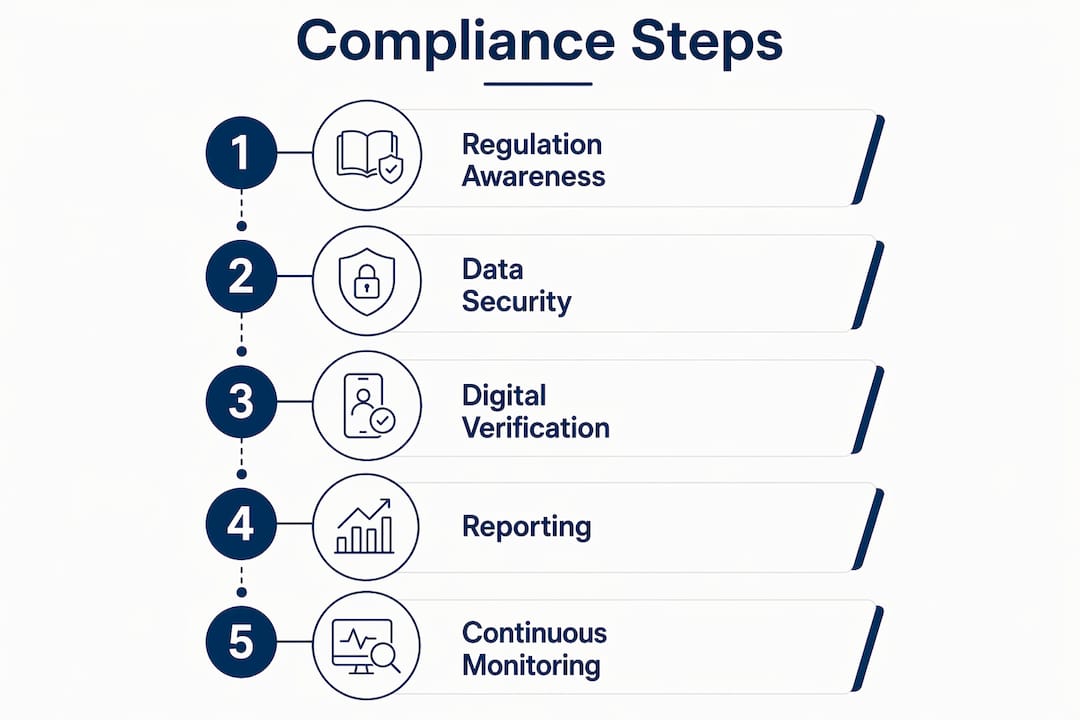
The compliance sequence most organizations should follow looks like this:
Audit current document workflows to identify which processes still rely on paper or unqualified digital signatures
Map regulatory exposure by jurisdiction, noting EU AI Act, eIDAS 2.0, GDPR, and NIS2 obligations separately
Implement qualified electronic signature tools that meet eIDAS 2.0 standards before the december 2026 deadline
Establish provenance records for all AI-generated content used in official documents or communications
Train compliance teams on the distinction between attestation, certification, and legalization under the new frameworks
“Digital provenance has shifted from an optional feature to a mandatory element of maintaining trust in digital content authenticity, especially with the rise of synthetic media.” — Gartner 2026 Digital Trust Trend
GDPR and NIS2 add a data security layer on top of these transparency requirements. Organizations handling attested documents must now demonstrate not just that a document is authentic, but that the data within it was collected, stored, and transmitted securely. These are not separate compliance tracks. They are converging into a single, unified standard for document trust.
What cryptographic technologies are driving attestation reliability?
Cryptographic attestation is defined as a method of verifying identity or document integrity through mathematical proof rather than physical inspection. This approach is becoming the standard for enterprise trust in 2026, particularly as AI-generated content makes visual verification unreliable.

Agent Verification Risks in 2026 are pushing organizations toward cryptographic identity, runtime attestation, and reputation directories. The problem is concrete: AI agents operating in enterprise workflows can be impersonated, manipulated, or substituted without detection unless cryptographic checks are in place. Emerging standards like AI Agent Specialist™ certification and agent reputation scoring are direct responses to this risk.
Three technologies are leading the field in digital provenance verification:
Technology | Primary Function | Key Use Case |
C2PA (Coalition for Content Provenance and Authenticity) | Embeds cryptographic metadata into content at creation | News media, legal documents, AI-generated images |
Content Credentials | Attaches verifiable authorship and edit history to files | Creative assets, official reports, contract documents |
SynthID (Google DeepMind) | Watermarks AI-generated content at the model level | AI text, images, audio, and video verification |
Pro Tip: For businesses handling contracts or official reports, C2PA-compatible tools let you embed provenance data at the moment of document creation. This means your attestation chain starts at the source, not at the notary’s desk.
Cryptographic attestation and continuous runtime verification are now recommended by AI security experts as baseline practices for enterprise AI deployments. Runtime verification means checking an agent’s or document’s integrity continuously, not just at the point of signing. That shift from point-in-time to continuous verification is the defining characteristic of trending attestation services 2026 introduces.
Traditional vs. digital attestation: how do they compare?
The gap between paper-based and digital attestation is widening in every measurable dimension. Understanding that gap helps professionals and businesses make informed decisions about which processes to migrate first.
Feature | Traditional Paper Attestation | Digital Attestation |
Processing time | Days to weeks | Hours to days |
Fraud resistance | Moderate (physical seals, stamps) | High (cryptographic signatures) |
Cross-border recognition | Jurisdiction-dependent | Growing via eIDAS 2.0 and bilateral agreements |
Audit trail | Manual, paper-based | Automatic, tamper-evident |
Cost per document | Higher due to manual handling | Lower at scale |
Regulatory compliance (2026) | Increasingly insufficient | Aligned with EU AI Act, eIDAS 2.0 |
The UAE MOFA attestation process illustrates where traditional methods still hold ground. UAE MOFA attestation remains the required pathway for validating educational, personal, and commercial documents for official recognition in the UAE. The process takes 2–3 business days and carries no expiration, though its acceptance depends on the recipient authority. For Filipino expats, this process is a non-negotiable step that Harrisncharms covers in detail through its UAE attestation requirements guide.
Financial attestation is moving fastest toward digital accountability. Stablecoin reserve attestations in 2026 are evolving from simple balance sheet snapshots into binding accountability tools with detailed business-continuity disclosures. EU MiCA reserve rules now require segregated accounts and full transparency. That shift reflects a broader truth: attestation is becoming a continuous accountability mechanism, not a one-time stamp.
The decision to migrate from paper to digital attestation is not purely technical. It requires vendor selection, staff training, and a clear understanding of which jurisdictions will accept digitally attested documents. Organizations that start this audit now will be better positioned when regulatory deadlines arrive.
How should organizations prepare for 2026 attestation demands?
Preparation for the new attestation environment requires concrete steps, not general awareness. The organizations that adapt fastest share three characteristics: they audit before they act, they prioritize regulatory deadlines, and they select platforms that support multiple attestation standards simultaneously.
Start with a document inventory. Identify every document type your organization issues, receives, or relies on for compliance. Flag which ones currently use paper-based attestation.
Prioritize EU-facing workflows. If your business operates in or with EU entities, eIDAS 2.0 and EU AI Act compliance are your most urgent deadlines. Both have hard dates in 2026.
Adopt cryptographic tools early. C2PA-compatible platforms and qualified electronic signature tools are available now. Early adoption gives your team time to train before deadlines force rushed implementation.
Verify your attestation partners. Not every service provider has updated its processes for 2026 standards. Ask specifically whether they support qualified electronic signatures and digital provenance records.
Pro Tip: For Filipino expats in the UAE, the difference between document legalization and attestation matters more than ever in 2026. Legalization and attestation are not interchangeable, and submitting the wrong one to a UAE authority causes costly delays.
Government platforms are accelerating this transition. Abu Dhabi’s Q1 2026 results show that public-sector digital infrastructure can handle attestation at scale when the systems are in place. Private sector organizations that align their workflows with these government platforms gain speed and compliance simultaneously.
Key Takeaways
Attestation in 2026 is defined by digital transformation, cryptographic verification, and regulatory mandates that make compliance non-negotiable for any organization handling official documents.
Point | Details |
Digital volume is surging | Abu Dhabi completed 637,000 digital attestations in Q1 2026, a 405% increase over prior periods. |
EU regulations set hard deadlines | The EU AI Act and eIDAS 2.0 both have 2026 enforcement dates with penalties up to 15 million euros. |
Cryptographic tools are now standard | C2PA, Content Credentials, and SynthID provide verifiable provenance for digital documents. |
Traditional methods still apply in UAE | UAE MOFA attestation remains required for official documents, taking 2–3 business days to complete. |
Early preparation reduces risk | Auditing workflows and adopting qualified electronic signature tools before deadlines prevents compliance gaps. |
What I’ve learned watching attestation change this fast
The pace of change in 2026 has surprised even professionals who have been in this field for years. What strikes me most is not the technology itself. It is how quickly regulatory bodies have moved from guidance to enforcement. The EU AI Act penalties are not theoretical. They are calibrated to hurt large organizations, and they take effect in august 2026.
What I have seen consistently is that businesses underestimate the gap between knowing a regulation exists and actually being compliant with it. Qualified electronic signatures under eIDAS 2.0 require specific hardware and software configurations. Runtime cryptographic attestation requires integration work that cannot happen overnight. The organizations treating these as IT projects rather than compliance priorities are the ones that will face penalties.
For Filipino expats in the UAE, the picture is different but equally urgent. The UAE’s digital attestation infrastructure is growing fast, and the MOFA process is becoming more connected to online systems. That is good news for processing speed. But it also means that documents prepared incorrectly at the source, whether in the Philippines or in the UAE, get rejected faster and with less room for manual correction.
My honest assessment: the future of attestation belongs to organizations and individuals who treat document authenticity as a continuous process, not a one-time checkbox. The tools exist. The regulations are clear. The only variable is how quickly you act.
— Harris
Harrisncharms: attestation services built for Filipino expats in the UAE
Filipino expats navigating UAE document requirements face a system that is changing faster than most guides can track. Harrisncharms specializes in exactly this space, offering attestation services aligned with current UAE MOFA requirements and the digital workflows that 2026 demands.

Whether you need help with educational certificates, personal documents, or commercial papers, Harrisncharms handles the process from Philippine-side authentication through UAE MOFA submission. The team stays current on regulatory changes so your documents meet the right standard the first time. For expats who cannot afford delays in visa processing, employment contracts, or family documentation, that accuracy matters. Visit Harrisncharms to review current service options and get your documents processed correctly.
FAQ
What is the biggest attestation trend in 2026?
The shift to digital attestation is the defining trend. Abu Dhabi completed over 637,000 digital attestations in Q1 2026 alone, reflecting a 405% increase driven by integrated digital identity systems.
How does the EU AI Act affect document attestation?
From august 2, 2026, the EU AI Act requires verifiable provenance for AI-generated content, with non-compliance penalties up to 15 million euros or 3% of global annual revenue. Organizations must implement attestation systems that prove content authenticity.
What is eIDAS 2.0 and why does it matter for attestation?
eIDAS 2.0 mandates qualified electronic signatures and digital identity wallets across all EU member states by december 2026. It means digitally signed documents carry the same legal weight as wet signatures throughout the EU.
Does UAE MOFA attestation still apply in 2026?
Yes. UAE MOFA attestation remains the required process for validating educational, personal, and commercial documents in the UAE. The process takes 2–3 business days and has no expiration date, though acceptance depends on the receiving authority.
What is cryptographic attestation?
Cryptographic attestation is a method of verifying document or identity integrity through mathematical proof rather than physical inspection. Technologies like C2PA and Content Credentials embed verifiable provenance data directly into documents at the point of creation.
Recommended
Comments