
Affidavit Attestation Process for Filipinos in the UAE

The affidavit attestation process is the formal, multi-step verification system that authenticates a sworn affidavit for international legal use. It confirms your identity, validates the oath you took, and collects official approvals from a Notary Public, UAE authorities, and the relevant embassy. For Filipinos living in the UAE, this process is the gateway to having your affidavit accepted by courts, government agencies, and institutions in the Philippines or any other destination country. Skipping a step or using the wrong notarial act can result in outright rejection, no matter how accurate the content of your document is.
What is the affidavit attestation process?
Affidavit attestation is the procedure that elevates a written sworn statement into a legally recognized document with evidentiary weight. A Notary Public verifies your identity, administers an oath, witnesses your signature, and applies an official seal. That notarized document then moves through additional layers of verification, typically UAE Ministry of Foreign Affairs authentication and then embassy or consulate legalization, before it is accepted abroad.
The distinction between attestation and simple notarization matters. Notarization is only the first step. Without the subsequent UAE and embassy approvals, your affidavit carries no legal weight outside the country where it was notarized. Filipinos in the UAE who need affidavits for property transactions, family law matters, or employment purposes in the Philippines must complete the full chain.
What documents do you need before starting attestation?
Gathering the right documents before you walk into a notary office or embassy prevents delays that can stretch your timeline by days or weeks. The requirements are specific, and missing even one item means a wasted trip.
Documents and identification you must bring:
A current, government-issued photo ID. Accepted forms include a passport, driver’s license, or Emirates ID. Expired IDs or non-photo IDs such as social security cards or school IDs are refused.
The unsigned affidavit in its final, complete form. Every blank must be filled in before you arrive.
Photocopies of your ID and the affidavit, as most UAE authorities and embassies require copies alongside originals.
Any supporting documents referenced in the affidavit, such as birth certificates, marriage certificates, or property titles, depending on the affidavit’s purpose.
Passport-sized photos if your embassy requires them for personal appearance appointments.
Pro Tip: Do not sign the affidavit before you reach the notary. Signing before the notary invalidates the jurat, and the notary will require you to re-sign under oath, which can cause delays and additional fees.
For Filipinos preparing documents for use in the Philippines, check the Philippine Embassy attestation steps before your first appointment. Requirements can change, and confirming them in advance saves you from making multiple trips.
How does the step-by-step attestation work in the UAE?
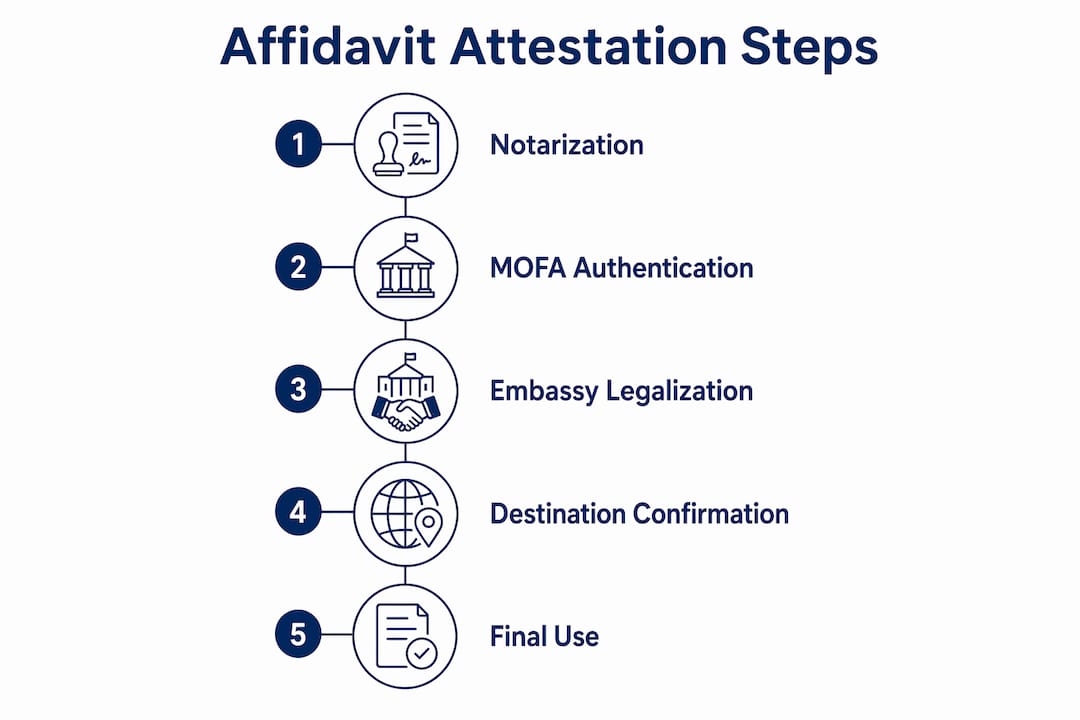
The full attestation chain for Filipinos in the UAE follows a fixed sequence. Each stage must be completed before the next one begins. Skipping or reversing the order causes automatic rejection.
Step 1: Notarization by a Notary Public
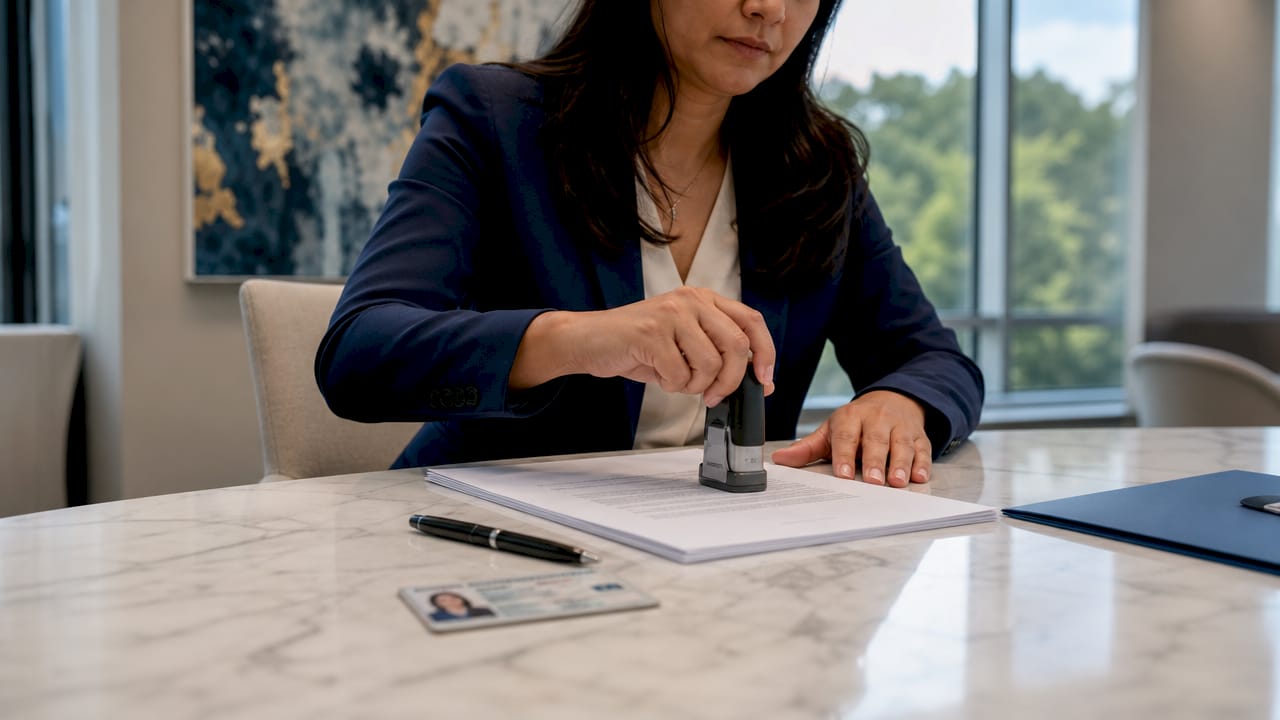
The Notary Public verifies your identity using your government-issued photo ID, administers the oath, witnesses you sign the affidavit, and applies the official notarial seal and jurat certificate. The jurat is the specific notarial act required for affidavits. It confirms that you swore an oath and signed in the notary’s presence. An acknowledgment, which only verifies your identity and signature, is not a valid substitute for an affidavit.
Step 2: UAE Ministry of Foreign Affairs authentication
After notarization, the document goes to the UAE Ministry of Foreign Affairs (MOFA) for local authentication. MOFA verifies the notary’s credentials and applies its own stamp or seal. Filipinos in the UAE must complete this step before any embassy will accept the document. Personal appearance at MOFA may be required for sensitive documents such as powers of attorney and sworn affidavits.
Step 3: Embassy or consulate legalization
The final step depends on where the affidavit will be used.
Destination | Required step | Processing time |
Philippines (Hague Convention member) | Apostille from UAE MOFA | Typically 3–7 days |
Non-Hague Convention country | Full embassy legalization | Typically 7–14 days |
Philippines via Philippine Embassy UAE | Embassy attestation or apostille confirmation | Varies by document type |
For documents destined for the Philippines, the UAE joined the Hague Apostille Convention, which means an apostille stamp from UAE MOFA may be sufficient. However, destination country requirements vary, and you must confirm with the Philippine Embassy in Abu Dhabi or Dubai whether apostille alone satisfies the receiving institution’s rules.
Pro Tip: Remote Online Notarization (RON) is now available in several jurisdictions. RON requires live video, credential analysis, an administered oath, and an electronic jurat certificate. Confirm whether the UAE authority or Philippine Embassy accepts RON-notarized documents before using this option.
For a detailed breakdown of UAE attestation requirements in 2026, including recent policy updates, review the latest guidance before submitting your documents.
What mistakes cause affidavit attestation rejections?
Rejection is far more common than most people expect. The errors below account for the majority of failed submissions.
Wrong notarial act. Confusing a jurat with an acknowledgment is the top reason foreign embassies and courts reject affidavits. An acknowledgment does not include an oath, so it cannot legally substitute for a jurat on a sworn statement.
Pre-signing the affidavit. Signing before you reach the notary invalidates the document. The notary must witness the signature in person for the jurat to be legally valid.
Expired or unacceptable ID. A notary will refuse any ID that is expired, lacks a photo, or is not government-issued. This includes student IDs, company IDs, and social security cards.
Incomplete or incorrectly formatted affidavit. Embassies have specific content and formatting requirements. A document that omits required clauses or uses the wrong template is rejected at the embassy stage, even if the notarization was correct.
Stopping after notarization. Many Filipinos assume that a notarized affidavit is ready for international use. Notarization alone does not satisfy UAE or Philippine Embassy requirements. The MOFA authentication and embassy legalization steps are mandatory.
“The jurat must include specific legal language confirming the oath and the witnessing of the signature. Minor errors in the jurat certificate often require correction or lead to outright rejection.” — LegalClarity
If your document is rejected, identify which step failed before resubmitting. A rejection at the embassy stage does not necessarily mean the notarization was wrong. Read the rejection notice carefully and contact the relevant authority for clarification.
How do you confirm your affidavit meets destination country requirements?
Confirming requirements with the destination country’s embassy or consulate is the final and most overlooked step in the attestation chain. Assumptions about what is “standard” lead to rejected documents and wasted fees.
The Philippine Embassy in the UAE is the primary point of contact for Filipinos sending documents to the Philippines. Filipino expats must confirm with Philippine consular services in the UAE and with the receiving institution in the Philippines whether apostille or full embassy legalization is required. Some Philippine government agencies and courts accept apostille-stamped documents directly. Others require an additional embassy certification.
The UAE’s membership in the Hague Apostille Convention simplifies the process for many destinations. However, the apostille only authenticates the notary’s credentials. It does not verify the content of the affidavit. The receiving institution in the Philippines still has the authority to accept or reject the document based on its own rules.
Pro Tip: Always request written confirmation from the embassy or receiving institution about their specific requirements. Verbal assurances are not binding. A written email or official notice protects you if requirements change between submission and processing.
For Filipinos who are unsure which authorized attestation officials apply to their specific document type, consulting a professional attestation service before starting the process saves significant time and cost.
Key Takeaways
The affidavit attestation process requires correct notarization with a jurat, UAE Ministry of Foreign Affairs authentication, and embassy legalization or apostille before any affidavit is accepted for international legal use.
Point | Details |
Jurat is mandatory | Affidavits require a jurat notarial act, not an acknowledgment, or they will be rejected. |
Never pre-sign | Sign the affidavit only in the notary’s presence to keep the jurat legally valid. |
Full attestation chain | Notarization alone is not enough. UAE MOFA authentication and embassy legalization are required. |
Apostille vs. legalization | Confirm with the Philippine Embassy whether apostille or full legalization applies to your document. |
Verify in writing | Get written confirmation from the destination institution before submitting your affidavit. |
What I’ve learned from seeing affidavit attestations go wrong
The most expensive mistake I see Filipinos make is treating the notary visit as the finish line. They walk out with a notarized affidavit, assume it is ready, and submit it directly to a Philippine government agency. The document comes back rejected weeks later, and they have lost both time and money.
The second most common problem is the jurat versus acknowledgment confusion. This is not a minor technicality. Foreign embassies and courts are trained to spot the difference, and they will reject a document that carries an acknowledgment when a jurat was required. If your notary does not ask you to raise your right hand and swear an oath, something has gone wrong.
My practical advice is to treat every step as its own separate task with its own checklist. Confirm the MOFA requirements before you leave the notary. Confirm the embassy requirements before you go to MOFA. And confirm the receiving institution’s rules before you submit anything to the embassy. The process is linear, and each stage depends on the one before it being done correctly.
One more thing: always keep certified copies of every stamped and sealed document at each stage. If a document is lost in transit or rejected at a later stage, having copies of the intermediate approvals saves you from restarting the entire chain from scratch.
— Harris
Affidavit attestation services for Filipinos in the UAE
Handling the attestation chain on your own is possible, but one missed step or wrong notarial act can set you back weeks.

Harrisncharms provides professional attestation services for Filipino expats in the UAE, covering every stage from notarization guidance to UAE MOFA authentication and Philippine Embassy legalization. The team verifies document formats, confirms current embassy requirements, and tracks submissions so nothing falls through the cracks. For Filipinos who need affidavits processed accurately and on time, Harrisncharms handles the details so you can focus on what the affidavit is actually for.
FAQ
What is the difference between a jurat and an acknowledgment?
A jurat is the notarial act required for affidavits. It confirms that you swore an oath and signed the document in the notary’s presence. An acknowledgment only verifies your identity and signature without an oath, making it invalid for affidavits.
Can I sign my affidavit before going to the notary?
No. Signing before you reach the notary invalidates the jurat. The notary must witness your signature in person for the affidavit to be legally valid.
Does the UAE accept apostille for Philippine documents?
The UAE is a member of the Hague Apostille Convention, so apostille is available for documents destined for other Hague member countries, including the Philippines. Confirm with the Philippine Embassy in the UAE and the receiving institution whether apostille alone is sufficient or if additional embassy legalization is required.
How long does the full affidavit attestation process take in the UAE?
Processing times range from 3–14 days across the full attestation chain, depending on the document type, MOFA workload, and embassy scheduling. Personal appearance requirements at the embassy can extend the timeline further.
What happens if my affidavit is rejected at the embassy stage?
Read the rejection notice to identify the specific reason. Common causes include wrong notarial act, incorrect formatting, or missing supporting documents. Correct the identified issue and resubmit. You do not always need to restart from notarization if the notarization itself was valid.
Recommended
Comments