
Adoption Certificate Attestation: What You Need to Know
- contact335627
- Jun 19
- 8 min read

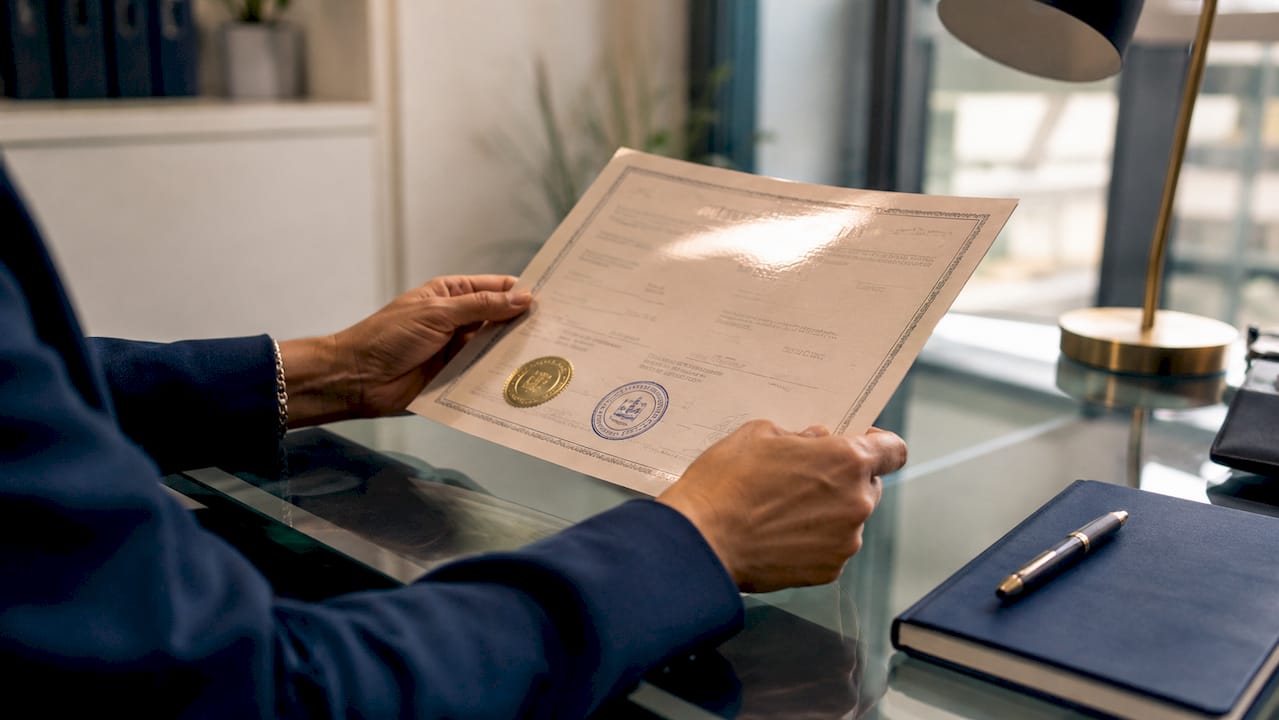
Adoption certificate attestation is the mandatory legal process that validates an adoption document’s authenticity for recognition by foreign governments, institutions, and authorities. Without it, an adoption certificate issued in one country holds no legal weight abroad. Filipino expats in the UAE face this requirement regularly, whether they are enrolling an adopted child in school, applying for a dependent visa, or establishing residency. The process involves multiple authentication stages, and the specific steps depend entirely on whether the destination country belongs to the Hague Convention. Understanding the difference between apostille and embassy legalization is the first thing you need to get right.
What is adoption certificate attestation and why does it matter?
Adoption certificate attestation is a mandatory multi-step legal procedure that confirms an adoption document is genuine and legally valid for use outside its country of origin. It is not a single stamp or signature. The process typically involves 3–5 stages, moving through notary verification, state or regional authentication, and then either apostille issuance or embassy legalization depending on the destination country.
The UAE is not a member of the Hague Convention. That means Filipino expats cannot rely on a simple apostille to satisfy UAE authorities. Full embassy legalization is required, which adds steps and time to the process. Knowing this upfront prevents costly mistakes.
Foreign governments use attestation to confirm three things: the document is real, the issuing authority is legitimate, and the signatures on it are authentic. A school in Dubai, an immigration officer in Abu Dhabi, or a court in Sharjah will not accept an adoption certificate that has not gone through this chain of verification.
How does the adoption certificate attestation process work?
The standard process for adoption document attestation follows a sequential chain. Each stage builds on the one before it, and skipping a step means the entire chain breaks down.
Step-by-step attestation stages
Notary verification. A licensed notary public confirms the identity of the document holder and the authenticity of the signatures. This is the starting point, but the U.S. Department of State is clear that notarization alone does not create international legal validity. It only confirms who signed the document.
State or regional authentication. The document moves to a state-level authority, such as a Secretary of State office or its equivalent, which verifies the notary’s credentials and seals the document for the next stage.
National authentication. In many countries, a national body such as the Ministry of Foreign Affairs or Ministry of External Affairs adds its own seal, confirming the state-level authentication is valid.
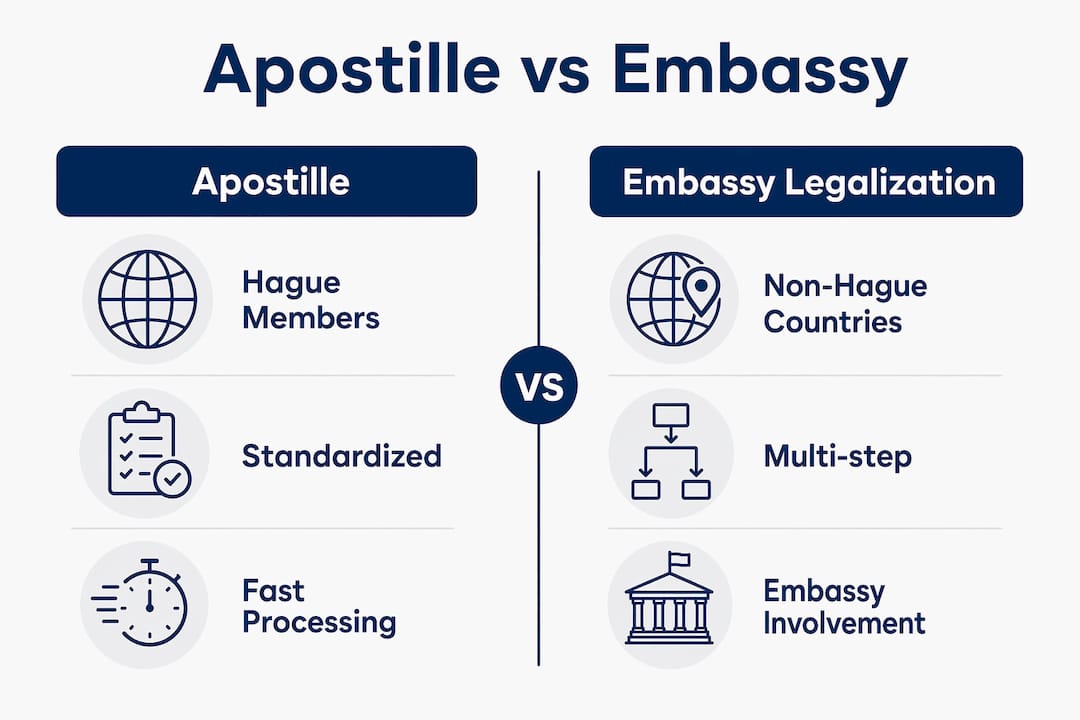
Apostille or embassy legalization. For Hague Convention countries, an apostille certificate is attached at this stage. For non-Hague countries like the UAE, the document then goes to the destination country’s embassy or consulate for a final round of legalization.
Pro Tip: Start the process at least 6–8 weeks before your deadline. Embassy legalization involves multiple departments and can take several weeks, while apostille services in some jurisdictions deliver within 24–48 hours.
Apostille vs. embassy legalization: a quick comparison
Feature | Apostille | Embassy legalization |
Applicable countries | Hague Convention members (120+) | Non-Hague countries, including UAE |
Number of steps | Fewer (typically 3) | More (typically 4–5) |
Processing time | As fast as 24–48 hours | Several weeks |
Final authority | Competent national authority | Destination country’s embassy |
Accepted in UAE | No | Yes |
How do apostille and attestation differ for adoption certificates?
Apostille and attestation are two different legal procedures that serve the same goal: making a document recognized abroad. The confusion between them is the most common mistake people make when preparing adoption paperwork for international use.
An apostille is a standardized certificate issued under the 1961 Hague Convention. Over 120 countries recognize apostilles as sufficient proof of a document’s authenticity. If you are moving to France, Germany, or the United Kingdom with an adopted child, an apostille on your adoption certificate is what you need.
Attestation, in the broader sense, refers to the full chain of authentication required for countries outside the Hague Convention. The UAE falls into this category. That means a Filipino adoption certificate destined for UAE use must pass through Philippine government authentication and then receive legalization from the UAE embassy in Manila. An apostille issued by the Philippines would not be accepted by UAE authorities on its own.
Here is where people go wrong:
Assuming an apostille works everywhere. It does not. Always confirm the destination country’s membership in the Hague Convention before starting.
Believing notarization equals attestation. It does not. Notarization is only the first step in a longer chain.
Submitting a document with the apostille or attestation certificate removed. Permanent attachment is required to maintain the chain of legalization. Removing it invalidates the entire process.
For a deeper breakdown of these two procedures, the guide on attestation vs. apostille differences covers the legal distinctions clearly.
Pro Tip: Always ask the receiving institution in the destination country exactly which form of legalization they accept before you begin. Requirements vary by agency, not just by country.
What documents are required for adoption certificate attestation?
Getting the document requirements right is where most applications succeed or fail. Foreign authorities are strict, and a single formatting error can result in rejection.
The core documents typically required include:
Original adoption certificate issued by the registrar or court, bearing wet-ink signatures and an official seal. Digital or solicitor-certified copies are rejected by most foreign authorities, regardless of how professionally they are prepared.
Court-issued adoption decree, if applicable. Certified copies must carry the judge’s signature and a raised court seal. A notary cannot substitute this authentication.
Valid identity documents for the adoptive parents, such as passports or national ID cards.
Supporting legal documents, which may include affidavits, court orders, or registered deeds depending on the jurisdiction.
Two points deserve special attention. First, adoption certificates are not eligible for e-apostille even in countries that have implemented electronic apostille systems. Physical originals must be submitted. Second, the apostille or attestation certificate must remain physically attached to the original document at all times. Detaching it, even accidentally, invalidates the legalization.
For Filipino expats preparing documents for UAE submission, the guide on preparing attestation papers provides step-by-step instructions tailored to this specific process.
What are the practical uses and benefits of attested adoption certificates?
An attested adoption certificate is the document that makes international family life legally functional. Without it, foreign institutions have no basis to recognize the legal relationship between adoptive parents and their child.
Common situations that require a properly attested adoption certificate include:
Dependent visa applications in the UAE, where immigration authorities require proof of legal parenthood
School enrollment for adopted children, where institutions need verified documentation of guardianship
Residency permit processing, particularly when adding a child to a family’s existing visa status
Inheritance and legal proceedings abroad, where courts require authenticated proof of the adoption
Travel document applications, including passports for adopted children in a new country
The risk of skipping attestation is concrete. UAE immigration offices reject unauthenticated adoption documents without exception. A rejected application means delays, additional fees, and in some cases, a child unable to travel or enroll in school while the paperwork is reprocessed.
Attested documents also carry a practical advantage beyond legal compliance. Foreign authorities process attested documents faster because the authentication chain removes doubt about the document’s origin. There is no back-and-forth verification with the issuing country.
For Filipino expats specifically, understanding attestation service options in the UAE helps identify the right pathway for each document type.
Key Takeaways
Adoption certificate attestation is the required legal process for validating adoption documents internationally, and skipping any step in the chain renders the document unacceptable to foreign authorities.
Point | Details |
Attestation is multi-step | The process involves 3–5 stages: notary, state authentication, national authentication, and embassy or apostille. |
UAE requires embassy legalization | The UAE is not a Hague Convention member, so apostille alone is not accepted for adoption documents. |
Physical originals are mandatory | Adoption certificates cannot be e-apostilled; foreign authorities reject digital or solicitor-certified copies. |
Notarization is not attestation | Notarization only confirms identity. It does not create international legal validity on its own. |
Attached certificates must stay attached | Removing an apostille or attestation certificate from the original document invalidates the entire legalization. |
What I have learned from years of adoption document legalization
The single biggest problem I see is not missing documents. It is misplaced confidence. People arrive with notarized copies, convinced they have done everything right, and then discover the UAE embassy will not touch the file. The U.S. Department of State makes this clear, but the message does not reach people until after the rejection.
The second pattern I see constantly is timing. People start the process two weeks before a visa appointment. Embassy legalization for non-Hague countries like the UAE does not work on that timeline. Multiple government departments are involved, and each one has its own queue. Six to eight weeks is a realistic minimum for full embassy legalization of an adoption certificate.
There is also a physical handling issue that surprises people. The apostille or attestation certificate is a separate document stapled or bound to your original. I have seen clients carefully remove it to make a photocopy and then wonder why the receiving authority rejected the file. That attachment is the legal chain. Breaking it breaks everything.
My honest advice: treat adoption certificate attestation the same way you would treat a court filing. Get the originals, confirm the exact requirements with the receiving institution, and do not assume any shortcut is acceptable. If you are unsure about any step, work with a professional service that handles these documents regularly. The cost of getting it wrong is always higher than the cost of getting it right the first time.
— Harris
How Harrisncharms handles adoption certificate attestation for you
Filipino expats in the UAE deal with one of the most demanding document legalization environments in the world. Harrisncharms specializes in exactly this: document attestation services for Filipinos navigating UAE requirements, including the full chain of authentication for adoption certificates.

The team at Harrisncharms understands the specific requirements of Philippine-issued adoption documents and the UAE embassy legalization process. From verifying that your originals meet wet-ink signature standards to coordinating with the right government offices, Harrisncharms handles the process so you avoid the rejections and delays that come from doing it alone. If you are preparing adoption paperwork for UAE residency, visa, or school enrollment, reach out to Harrisncharms before you submit anything.
FAQ
What is adoption certificate attestation in simple terms?
Adoption certificate attestation is the official process of verifying an adoption document’s authenticity so foreign governments and institutions will legally recognize it. It involves multiple authentication stages, ending with either an apostille or embassy legalization depending on the destination country.
Does the UAE accept an apostille on an adoption certificate?
No. The UAE is not a member of the Hague Convention, so an apostille is not sufficient. Adoption certificates intended for UAE use require full embassy legalization, which includes authentication by the UAE embassy in the document’s country of origin.
Can I submit a digital copy of my adoption certificate for attestation?
No. Adoption certificates are ineligible for e-apostille even in countries with electronic apostille systems. Physical originals with wet-ink signatures must be submitted for legalization.
How long does adoption certificate attestation take?
Apostille services can process documents in as little as 24–48 hours in some jurisdictions. Full embassy legalization for non-Hague countries like the UAE typically takes several weeks due to multi-agency processing.
What happens if I remove the apostille from my adoption certificate?
Removing the apostille or attestation certificate from the original document invalidates the legalization entirely. Foreign authorities require the certificate to remain permanently attached to the original document.
Recommended
Comments